I was surprised to learn recently that being poor isn’t defined primarily by how much or little money a person has.
Poverty is about how dysfunctional or broken a person’s matrix of relationships is – with family, government, community, neighbours, those in authority, God.
The resulting isolation excludes them from all things that bring meaning and life and hope. Of course resources and money are part of this, but not the sole or even main driver of what we describe as poverty.
I’m often disappointed to see Christians and churches supporting apparently worthwhile causes that I know address only a narrow range of factors in the matrix of dysfunction. Too often we go for what is “sexy” and has a high “feel good” factor, and allows us to feel as if we are making a difference, rather than a project that has a longterm sustainable approach to addressing the range of issues that allow people to become more human.
My intent and prayers for Just Church, a March gathering at the intersection of faith, justice, worship and arts, is that people will leave the South Auckland venue knowing that God has spoken to them; that they know where to find the resources to guide and sustain them in their engagement with injustice globally, locally and personally; and how their community of faith can build for the Kingdom.
Just Church has no high-profile imported speakers. It has a wide range of local people with loads of knowledge and experience, some artists and poets, a group of Kiwi worship curators doing worldclass work in public places and in church worship, all of whom will be available for engaging with and questioning.
I’d love to meet you and to have you contribute to the conversation.
Mark Pierson – Worship Curator, ex-school teacher, ex-Baptist pastor, author (The Art of Curating Worship, The Prodigal Project, Fractals for Worship), writer, speaker on things worship and the arts, currently Christian Commitments Manager World Vision NZ, sustained by the community at The Upper Room, Auckland.
My name is Craig Vernall. I’m the National leader for the Baptist Churches of NZ.
I understand from our host Bishop Kito that I may be the first Baptist to speak at this event. So thank you Bishop for the opportunity to do so.
There are 246 Baptist Churches in New Zealand.
We are a mainline evangelical movement of churches. We occupy grand buildings on Queen Street and shop fronts. We have churches in provincial towns, cafes and any old pub that’s run out of beer.
The Baptist church movement began 405 years ago in Amsterdam when a small group of separatists fled from England. There they were being persecuted for their expression of the Christian faith.
Since their outset Baptists have always been strong advocates for the Freedom of Religion, Freedom of Conscience, and Freedom of Expression. That includes all denominations and all faiths. This may explain why in a little while I’ll be reflecting upon the ministry of T.W Ratana.
– o O o –
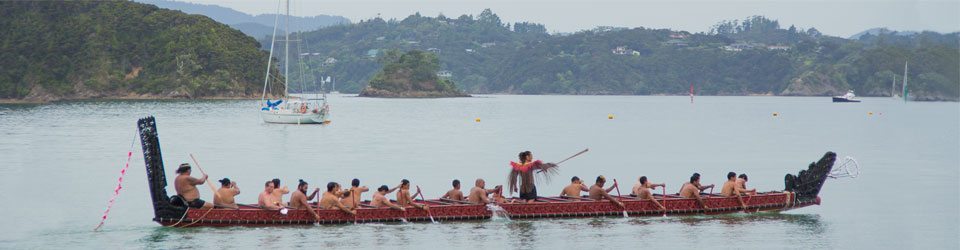
Today, Waitangi Day, celebrates the birth of our nation. That’s why we are here, at the cradle of our beginnings. Waitingi is our nations Turangawaewae.
174 years ago we signed an agreement.
Maori – who are one parent. The Crown – the other parent. And we the Church, who served as the midwife to the Treaty being birthed by these two parents. This birth gave us something very unique.
That’s why Waitangi Day celebrations are so important. Because 2 parents return to revisit the day of birth and the birth of vision. And like any birthday, we measure how far have we come. That was a tradition in my household. Every birthday the tradition was to stand near the pantry door and measure the growth from the previous year. So we do the same as a nation. We also measure: What’s good? What’s not? How far have we grown? Asking how far we have to go?
NZ is now a diverse nation. Even in my 50 years it’s changed considerably. Different ethnicities and cultures fill our cities and towns bringing colour and difference to Aotearoa. New people from different nations all seeking a dream. In doing so they bring the world to our neighbourhoods.
Equally our young people travel overseas bringing culture home with them. That great Kiwi tradition. The great O.E. 30 years ago I returned from my 2 and a half years of O.E. I returned and showed my parents my passport with the stamps of different countries that I’d visited. Now young people return and show their parents their tattoos that they got from different countries!
When I meet a new New Zealander. Someone who wasn’t born to our country or born to our languages, I think “Lord, the parents of this nation had better get things right.”
Tangata Whenua, The Crown and the Church. So much is invested in this foundational relationship that serves our nation. Because if we sow division we will reap division…but… if we sow unity we will reap unity. Abraham Lincoln quoted Jesus Christ in a State of the Union address saying, “A house divided against itself will not stand”.
The hope that is carried within our Treaty is the hope both present and future for our nation’s prosperity. These new citizens – new cultures, look to the Treaty and ask: “This land that’s adopted me, this Mother and Father, Maori and Crown, these parents of this nation had better get it right”. For my hopes and dreams can only be achieved if the nations parents do this well. Or else this family of Aotearoa – New Zealand and it’s citizens will never fulfil our God given calling”.
This Waka that we are all paddling in has such potential that others around the world can see it. But maybe we don’t?
Our story of nationhood is a terrific story. Other nations would love to have our story. Other nations have had centuries of war and conflict. By comparison our nation has had a terrific but staggered start. It’s where we go from here that counts.
The Treaty of Waitangi is more than a partnership. In fact we belittle the Treaty by calling it a partnership. The Treaty of Waitangi is a covenant. A covenant is binding beyond the level of mutual convenience. Beyond simple partnership.
The Christian story talks knowingly about covenant. Covenant in the scripture always speaks about death being an essential part of a covenant. Biblical covenant always contains a death of some sort. Death to self or death by someone or something.
The central message of the Gospel, the Christian covenant, involves the death of Jesus. When he voluntarily gave up his life on a Roman cross to die for the sins of the world. A covenant – sealed in the blood of Christ. For those who put their faith in His sacrifice for their sins. A covenant for all those who believe upon him. Because death is irreversible, making the Christian covenant immutable, unchangeable, everlasting. A Covenant made by God. But founded in the death of his son Jesus.
For our Treaty covenant to be successful it requires an on-going death. That is: Death to self – or death to any claim to cultural superiority. This, we all know, has been our weakness. The Crown now freely admits this history. But the Church – the midwife, also needs to remember its place in this story – the good and the bad. The church was an integral player in the original Treaty process. But we haven’t always fulfilled our God given responsibility.
We must remember that only 39 Maori leaders signed the Treaty here on these grounds 174 years ago. What’s important to remember is that 500 more signatures were solicited throughout this nation by missionaries (of Anglican, Methodist and Catholic denominations) who travelled the length and breadth of the country with copies of the Treaty. Yes, the Treaty was born here at Waitangi, but the labour pains of birth continued for months as the Church – the midwife – gathered the signatures needed to ratify the Treaty. Going from tribe to tribe, Chief to Chief – forging this new covenant.
Sadly, with the passing of time, the Church – now of all denominations, failed in its responsibility to nurture this new born Treaty into maturity. That’s why the Treaty today has yet to reach its fullness. It was not parented well by one of the parents or remembered by the midwife.
Time – unchallenged will always see us default to the old Adamic nature, to the Garden of Eden where self-interest prevails over “death to self” or covenant. Death or death to self has its own mystery that brings depth and reflection, honesty and vulnerability. Covenant means death; to self and the serving of our own interests.
A personal experience that my family is living with now illustrates this point. Four years ago our daughter married a terrific young Australian named Karl. One year ago, at the age of 24 Karl was diagnosed with Leukaemia. Three weeks ago he was told that there was nothing more the doctors could do for him. For our family this has brought an enormous level of depth, reflection, honesty and vulnerability. Any selfish ambition is exchanged for seeking the best for each other. It’s both a challenging and surreal experience that we are having with Karl, our daughter Brittany and God.
In the Bible, there is a confusing sentence of scripture found in the book of Ecclesiastes.
It is better to go to the house of mourning than to go to the house of feasting.
These words by King Solomon make sense to me now. For through our own experience with Karl we’re growing in understanding about how “the house of mourning” sadly brings it’s deeper rewards.
Ratana
In this nation during the 1920’s and 1930’s – “The house of mourning” belonged to Tahupotiki Wiremu Ratana. This prophet was accredited to us by God with signs and wonders following. Ratana’s healing ministry was astounding and the Ratana museum is still filled with crutches and wheelchairs. These being the evidence of people being healed as he prayed for them. Historians will tell us that it was through petty jealousies that caused the mainline Churches to abandon him. In spite of their doctrinal differences.
However throughout his ministry, Ratana had two goals. Ture Wairua – The ministry of the Spirit and Ture Tangata – The ministry for the people.
Ratana was deeply troubled about the Treaty or the lack of its presence. Ratana was a burden bearer – an intercessor, he heard and carried the pain of his people. In 1924 Ratana took a petition to London to seek an audience with the King and the League of Nations. Ratana had collected 40,000 signatures. These represented nearly three quarters of all Maori. But no one gave him any time. London ignored him. The New Zealand government worked hard to block his efforts.
Later in 1935 Ratana went to Parliament and presented to Prime Minister Michael Savage four symbols. Two of these symbols were a potato and a broken watch. He carried the potato – symbolising the land that was taken and how Maori could no longer feed themselves. The broken watch – symbolised the Treaty that was broken. It no longer worked and wasn’t being honoured.
Little was heard and even less was done to right the injustices that Ratana identified.
The Treaty of Waitangi was seen as history – no longer needed. Sadly it was cultural superiority by both the Government and the Church that caused us to miss an opportunity to begin to reconcile this Treaty covenant.
So I ask the question. How different would our nation be today if we had listened to the burden for our nation that Ratana carried those years ago? How much better off and further ahead would our nation be if during Ratana’s time 80 years earlier had we became serious about our Treaty?
A missed opportunity – that undoubtedly scarred Ratana and his people. The distance we see today that still separates Ratana from the mainline church still reflects this rejection and disappointment. Much more needs to be said and much more needs to be reconciled
But the call to us is still evident. That’s why we are here today – The Treaty is a gift from God.
So as two parents and a midwife we must continue to make covenant by laying aside our temptation for cultural superiority. We must listen to each other in the “House of Mourning”. Jesus said, “No greater love is there than this than to lay down ones life for his brother”– seeking each others highest in a spirit of Christian forgiveness and reconciliation. Ensuring that each generation hears the story that God has given to our Nation – and for us to continue to write our own chapter with the heart of putting others first.
We need to feel the pain that Ratana carried in his heart for our Nation. We need to be burden bearers, intercessors for the travail of our nation in the way that Ratana first did.
His vision took our story to London and the League of Nations. God’s vision brings us here today so we can capture afresh the spirit of humility with which and only which – we can make this journey together.
May God bless us all.
Craig Vernall is the National Leader for Baptist Churches of New Zealand
This is an abridged copy of the message he shared on Waitangi Day, 6th Feb, 2014 at Waitangi, Northland, NZ
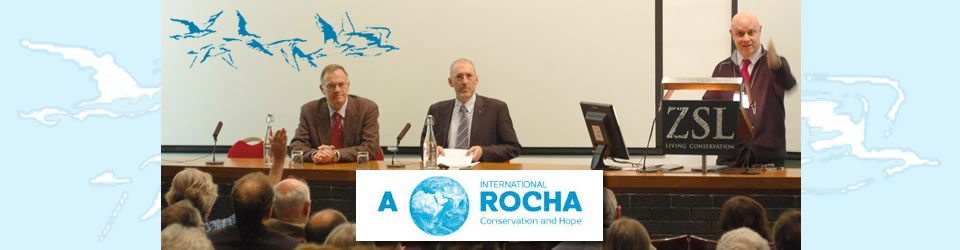
Nearly 200 people attended the lecture, held in the impressive surroundings of the Huxley Lecture Theatre, ZSL London Zoo. Reflecting John Stott’s commitment to ‘double listening’ to God’s word and God’s world, there were two eminent speakers:
Rev Dr Chris Wright(International Ministries Director of Langham Partnership International) spoke authoritatively about the biblical affirmations of the goodness, glory and goal of creation. Creation’s goodness consists of its intrinsic value, its fullness (Isaiah 6) in terms of biodiversity is God’s glory, and its goal is to be included in God’s saving work through Christ. Quoting the Lausanne Cape Town Commitment, Wright made a convincing case that creation care ‘is a gospel issue within the Lordship of Jesus Christ’. Rather than seeing Christ’s work as primarily about humanity, ‘the gospel is the good news that is contained in the grand story of God’s good purpose for all creation, a purpose in which, by God’s grace, we can have a share.’
David Nussbaum(Chief Executive of WWF-UK) told the story of his personal and theological journey into leading a major conservation charity. He challenged the dualism and anthropocentrism of many Christians, asking why it is that the Christian presence in areas of poverty and corruption is so much greater than in tackling biodiversity loss. He concluded by quoting WWF-UK’s strapline ‘a world with a future where people and nature thrive’, and commending this as a vision that harmonized with a Christian understanding of God’s purposes for his world.
by Nigel Dixon member of NZCN All of Life Faith discussion group
I guess my concern, as I write these words, is to express the essential core of what it means to be Christian in our context. So, in choosing these words, I am seeking words that can define us as a community as well as being missional (there being an integrity between how we live together and how we face/embrace the world).
Living the story
We are called to live in the story that begins with creation and concludes with the completion of the new creation – in the story of God. This narrative invites us to take part in God’s unfolding purposes and longings for human life and the care of creation. This story centres on Jesus who incarnated God, who Died and rose again and reigns as King and calls us to live in this kingdom reality and kingdom dream. We invite every person to be participators in this new covenant and new creation.
Living as community
Karl Barth once said; ‘there is no such thing as an individual christian’ yet our culture, however, has radcially individualized the way we see our lives and the way we live together. Central to Jesus’ mission (indeed the whole Bible) is the formation of a community that would live in the life of God – for the sake of the world. This community, the church, to called to live incarnationally (forgiving, serving,…), relationally (committed friendships, healthy marriages…), missionally, the message they know and believe.
Living vocationally
Every person is God breathed and God called . Our human journey, in part, is a journey of discovering who we are, how we are wired, and how to serve God best in the world. The church, therefore, ought to be deeply committed to helping people discover who they are and supporting them as they navigate their way in the world. This involves valuing the world of work – that the church is developing leaders and giftedness to bless, and to have influence, in the world.
Living compassionately
The church is a community that lives for the sake of the vulnerable, the disadvantaged, the outsider. Loving our neighbour, whether they are in Christian community or outside it, is the essence of Christlikeness. Jesus always practiced a radical inclusion of the outsider – this involves seeing people, accepting people and acting with compassion; hospitality, generosity and creativity for the sake of the other.
Nigel Dixona member of NZCN’s All of Life Faith discussion group. He is a life coach, husband, father, and bible teacher. He completed a post-graduate theological study through Regent College in Vancouver. He loves exploring scripture and culture and the challenge that being Christian poses in a post-Christian world. Nigel is employed part-time by Emmaus to organise the curriculum and lecture. He is the author of Villages Without Walls.
John Minto’s idea of capping the top council salary at 5 times living wage, or $191k, may or may not be unrealistic. The Mayor is at least partly right in saying the city needs to meet the market in salaries for its senior staff. But the market is not the final arbiter of what is right and wrong, And it certainly does not lead of itself to a just and decent society.
Surely a rate payer funded salary of 20 times the living wage, along with the huge number of others on very high salaries, represents a serious injustice. Don’t forget that the living wage John Minto talks about is already a much higher figure than the minimum wage which many Aucklanders are on.
The ever widening gap between rich and poor is something that those in power seem reluctant to do anything about, but it represents a serious and growing injustice in this country.The biblical principle of God’s valuing every person and caring for the poor cannot be reduced to simple salary comparisons. But the question must me asked “Is it fair for people to be earning 10, 15, or 20 times as much as others who live and work in the same community, who work the same hours, and who often struggle to even cope with basic living costs?”
Are there not people who would be willing and able to do these jobs for salaries that would be regarded by most as more reasonable?
Would it not be decent and reasonable for the people in these high salary rate-payers funded positions to at least decline their next few pay rises, which in the case of the current reported increase for Watercare’s CEO is twice what some people earn in a whole year?
If they can’t bring themselves to trim their salaries, what about raising the salaries of those at the bottom to a living wage?
It’s time for those in leadership in Auckland’s and possibly other Councils to stop this injustice.
It’s time for us to let them know that those who pay their salaries want to see the situation changed.
Many readers will be familiar with the name Keith Newman, author of Bible and Treaty – a book we’ve been encouraging people to read in the lead up to 2014 – the year we mark 200 years since Samuel Marsden first preached the gospel in Aotearoa New Zealand.
Keith has recently released a new book called Beyond Betrayal, and was interviewed by Chris Laidlaw on Radio New Zealand, Sunday 29 September.
As Keith talked about the important role played by the missionaries in New Zealand, and especially by Maori believers, Chris Laidlaw asked “Has NZ history sold Christianity a bit short?”.
Keith’s answer will not be a surprise to most readers but the examples he gives and the stories he shares are well worth listening to.
Chris Laidlaw challenged Keith about claims over the years that evangelical Christianity had undermined the very essence of Maori culture and that in effect the decision to send missionaries to countries like NZ was a form of spiritual assimilation?
Keith’s reply was that the role of the missionaries had been quite misunderstood. He said that the missionaries had to learn and speak the language, to live among the people, learn their customs, “and of course they were working very hard to undermine some of the nastier elements of [the culture] cannibalism, utu, and bring ideas of forgiveness. But once Maori got this they realised that this was a very important change for them”. He went on to talk about how the constant utu, battles, and so on, were decimating the tribes and undermining their ability to survive and trade.





 Craig Vernall is the National Leader for