When Indonesian President Joko Widodo took office one year ago this month, there were high hopes that his government would check Islamist extremist violence. However, President Jokowi, as he is affectionately known, is yet to prove that he has the ability to meet that expectation.
Jokowi does seem to have the will, as he recognizes that religious extremism is a serious issue, unlike his predecessor Susilo Bangbang Yudhoyono, who neither acknowledged nor did anything to control the growth of extremist groups.
Jokowi’s administration has been promoting the idea of a modern and moderate Islam to fight the rise of Islamist extremism. However, there appears to be a flaw in the president’s methodology to deal with the threat. He seems to be working towards making the Indonesian society more tolerant, which, of course, is remarkable, but his efforts are not accompanied by strengthening of the rule of law.
Since the beginning of his presidency, Jokowi has been implementing a cautious bottom-up strategy, which is needed to promote tolerance and moderation, while avoiding a direct confrontation with extremist groups. This perhaps explains why he has not been taking enough top-down measures required to improve law and order. And extremist groups seem to have little fear of action by the government yet.
A month after Jokowi took office, extremist groups Islamic Defenders Front (FPI) and Forum of Indonesian Islamic community (Formasi) blocked services in four Protestant churches, and then moved on to threaten a Catholic church, St. Odilia in Cinunuk, in West Java province. There was an opportunity in these incidents for Jokowi to set the tone of his governance by taking strong action against these groups, but he didn’t avail it.
The GKI Yasmin church in Bogor on the suburbs of Jakarta also continues to hold worship services outside the presidential palace as their building remains sealed despite a directive of the Supreme Court for the local authority to allow the church use the premises. The city mayor says he will still not de-seal the church.
Jokowi has the power to enforce the highest court’s order, but he has taken no action against the Bogor mayor, who is under pressure from extremist groups. The GKI Yasmin congregation will hold its 100th service outside the palace, which is Jokowi’s office, next month to carry on with their peaceful and prayerful protest.
Recently, Jokowi presided over the congresses of Indonesia’s two largest Muslim organizations, Nahdlatul Ulama (NU) and Muhammadiyah, both of which promote tolerant versions of Islam. Instead of pledging strong action against those who propagate extremist ideologies and indulge in violence, he called on the NU to increase its role as a representative of moderate and peaceful Islam and to address the issue of extremism.
As Human Rights Watch noted, Jokowi sought to “outsource a solution to Indonesia’s religious intolerance problem to NU and Muhammadiyah.”
Despite being influential and popular, the two organizations cannot be expected to handle the growth of extremism, which has many facets – some of which can be dealt with only with the power of the state.
A recent editorial in The Jakarta Post stated this: “Indonesians need both organizations, widely considered the global face of Indonesia’s ‘moderate Islam,’ to contribute much more and help protect them from today’s strong appeal to violent jihad in the name of God. These ‘moderates’ tend to downplay the growth of homegrown terrorism, insisting they are minority. However, a few hundred recruits of the Islamic State (ISIS or ISIL), found to be from Indonesia, are too many from a ‘moderate’ Muslim nation.”
Jokowi also attended attend a national congress of the Indonesian Ulema Council (MUI), the country’s top Muslim clerical body which issued a fatwa saying the Ahmadiyya sect wasn’t part of the Islamic faith and that its followers were infidels. The fatwa has led to numerous attacks and brutal, public murders of people from the Ahmadiyya community.
In a recent meeting of Indonesian Muslims in Yogyakarta, the MUI did not invite representatives of Ahmadiyya and Shia organizations, but sent invitations to extremist groups like the Indonesian Mujahidin Council (MMI), which is known for its jihadist ideology, and the FPI, which is known for targeting Christians, as reported by local newspapers.
Jokowi’s political compulsions are understandable.. The parliament is dominated by opposition parties, some of which are Islamist and can make it difficult for the president to function. However, just as Jokowi has managed to win their support for passing important bills, it is not impossible for him to make his way to adopt a strict policy in the area of law and order. After all, every incident of blocking of worship services, violent attacks and closure of churches is a blatant violation of law.
Bringing change in religious attitudes is a long-term goal, as it takes time for attitudes to change. In the meantime, as a short-term goal, Jokowi also needs to restore the confidence of minorities, including Christians, Ahmadiyyas, Shias and others. It would need both bottom-up and top down approach to deal with the menace.
World Evangelical Alliance (WEA) Religious Liberty Commission (RLC) sponsors this WEA-RLC Research & Analysis Report to help individuals and groups pray for and act on religious liberty issues around the world. WEA has a consultative status with the UN Economic and Social Council.
This report was researched and written by Fernando Perez, and moderated by the WEA-RLC Executive Director, Godfrey Yogarajah. It can be used for distribution or publication with attribution to WEA-RLC.
Christian faith is not a part-time activity. It is to be lived out 24-7-52. For many Christians this involves living out our faith at home, in our communities, and in our workplaces. But several myths about faith and work can prevent us from being effective witnesses in this area of life.
Kara Martin is Associate Dean of the Marketplace Institute at Ridley College, Melbourne, Australia.
When we met at Ridley a year ago I asked Kara if she could condense some of the most important messages she had learned that would help Christians be more effective witnesses in their workplaces. Kara’s response has been published by NZ Christian Network in our series of |Notes (one-page resources), and forms the first part of this publication.
One of the discussion groups hosted by NZ Christian Network is focused on ‘missional living’ – what does it mean to be a witness and follower of Jesus in every area of life. The group includes a number of locally and internationally respected leaders. As we were discussing Kara’s |Note, we realised that many people interested in this topic might find it useful to ‘eavesdrop’ on our conversation.
So, five of the group members agreed to write a brief comment on Kara’s original |Note (hence ‘6 views’). Once completed these were circulated to the group, and everyone then wrote a brief reflection on each other’s comments. Kara Martin added a conclusion.
The interaction between the six authors not only acts as a refining process – enabling you to see more clearly God’s intention for how faith and work are connected. Hopefully it will also serve as an example of how Christians can discuss different ideas in a way which is honouring to God.
One of the biggest potential shortcomings of this project and of the individual contributions is the strict word limits we imposed on the authors. We did this so that the final publication would be more accessible to a wider audience. It does mean though that the authors have not been able to explain themselves as fully as they would have liked.
We trust that they have each managed to communicate enough to help stimulate your own thinking, and that you the reader will extend to them all the same grace they have shown to each other.
The World Evangelical Alliance (WEA) in collaboration with several of its global partners participated in the preparation for the United Nations’ (UN) World Humanitarian Summit (WHS) by submitting a comprehensive paper on ‘the unique and essential role of the evangelical community in humanitarian response and development.’
Titled ‘A Call to Commitment and Partnership – A World Evangelical Alliance Brief on the Evangelical Community and Humanitarian Development’, it explains who evangelicals are, why they engage in humanitarian work, and how they work: from the global level of associations, networks and international Non-Government Organizations (NGOs) to the grassroots level of local churches.
“We welcome the opportunity that the World Humanitarian Summit provides to faith-based organizations to participate in a meaningful conversation on how to better respond to the ever increasing humanitarian needs around the world,” said Bp Efraim Tendero, Secretary General of the WEA.
“Representing a diverse constituency of some 600 million evangelicals in 129 countries, the WEA’s paper reflects both, our wide experience of serving those in need and our ethos of intentionally and consistently living out our faith in unconditional service.”
Research has long shown that people and communities turn to faith in times of humanitarian crises to make meaning and find hope, the report says, adding that new studies have also begun to bring light to the important role faith-based organizations provide in humanitarian contexts. This role is based upon a theology of Christian faith that models itself on the unconditional love of Jesus Christ, who calls us to love our neighbor. In the humanitarian context, love is expressed through timely, lifesaving action in service to all in need without discrimination.
The evangelical community is committed to participating as an active partner in humanitarian response and development, recognizing that in a diverse world we will act alongside other faith and non-faith groups, and do so with respect and humility.
The paper that was prepared in collaboration with Micah Global, the Humanitarian Disaster Institute of Wheaton College, Food for the Hungry, and Tearfund UK, also calls on the UN to improve the acceptance/understanding among the international community of the unique value of faith based organizations, and thereby more deeply engage the faith communities in humanitarian and development response.
It features contemporary and historical illustrations of how evangelical organizations, churches and individuals have responded to calamities, such as the Ebola crisis in West Africa or the floods in Mozambique. But it also addresses ‘misperceptions and proper criticisms of the evangelical community around gender discrimination and proselytizing,’ calling upon the evangelical community to ‘work together toward addressing these issues.’
“As we worked on this paper and gathered the insights from participants around the table, we were reminded again of our call to serve a suffering world in the name of Christ. The paper can be read as a devotional, a call, a challenge to respond to those in need,” said Commissioner Christine MacMillan, WEA’s Director of Public Engagement and one of the authors of the paper. “As WEA, we encourage churches, Christian organizations, and individuals to use this paper for reflection on our ethos and our values as we seek to live out our faith in God’s so loved world.” For more information on the World Humanitarian Summit, visit: Worldhumanitariansummit.org
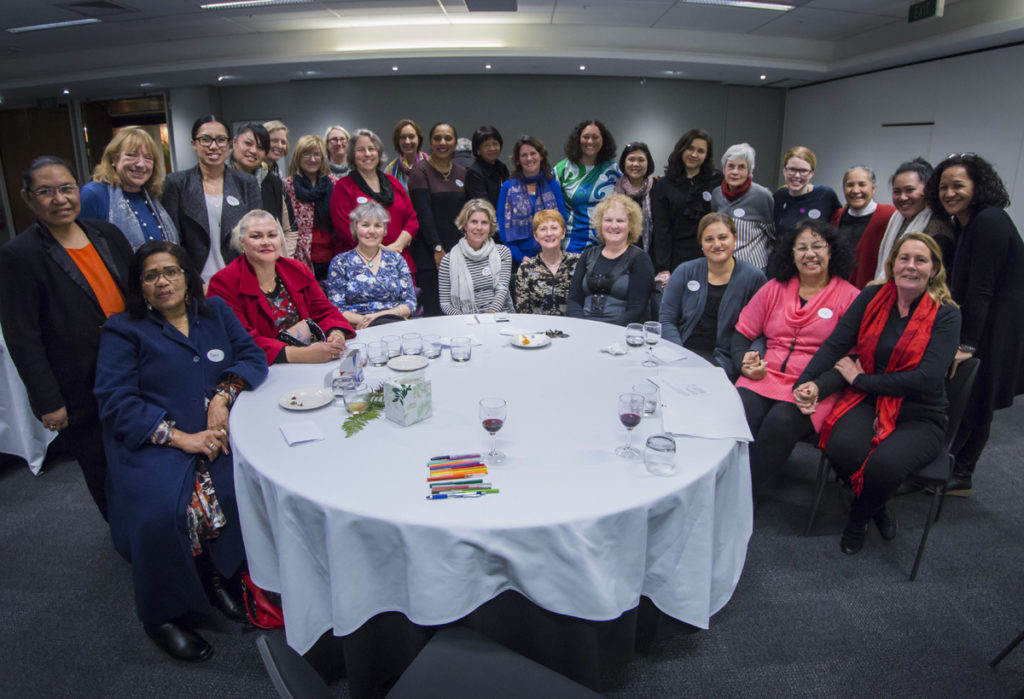
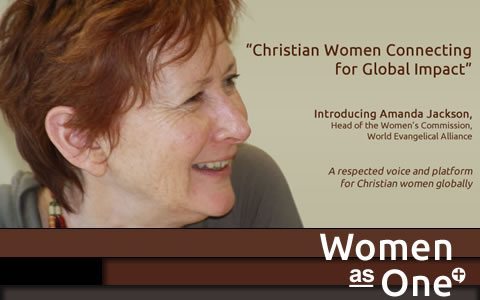
Tuesday 11th August saw Christian leaders from Auckland and beyond attend the event ‘Christian Women Connecting for Global Impact’ at AUT. They met to share their stories and hear from Amanda Jackson about the experiences of women around the world. In her role as Executive Director of the Womens Commission, World Evangelical Alliance, Amanda sees firsthand the challenges faced by women across many nations as they seek to understand and live out their lives as women of faith.
The evening was also the launch of Women as One, the NZ and South Pacific Women’s Commission, recently established under the umbrella of the NZCN. The Commission has a vision to provide a platform to Connect, Equip and provide an opportunity to hear the Voices of Christian Women in New Zealand and the South Pacific.
Leaders Janet Tuck and Rachel Afeaki-Taumoepeau shared their hopes and aspirations for the Commission. They see a real opportunity to connect Christian women across New Zealand and the Pacific region from different denominations and ethnic backgrounds.
Attendees shared their stories in relation to four key words: Leadership, Opportunity, Woman and Church. The journey has been hard for some, with the stories quite ‘gritty’ and honest. However the evening was one of real warmth and connection. There was a lot of laughter, and some new friendships established. The few brave men who attended were provided with women’s wigs in order to ‘blend in’ more easily. Glyn Carpenter sporting a long white wig almost looked the part!
Feedback from the night has been very positive, with several telling of a sense of God calling them to be there, and a real excitement about what might come next.
Special thanks go to:
Agnes Naera and Chantelle Lincoln from AUT for the wonderful hospitality and opportunity to run this event as part of their diversity week
Amanda Jackson for visiting and inspiring us with her vision for women around the globe, and to husband Lewis for his wit and wisdom
The wonderful women who attended the evening and participated so honestly and graciously
To our God who continues to inspire, equip, empower and guide us on our journeys
We look forward to the NZ & South Pacific Women’s Commission “ Women as One” developing a range of activities and opportunities for engagement. Watch this space.
Amanda Jackson, leader of the WEA Women’s Commission, was interviewed by John Peachey on Radio Rhema this morning (11/08/2015). Amanda is currently visiting New Zealand to help us launch Women As One in the NZ and Pacific region.
Listen to Amanda and John discuss the imbalance between men and women represented in society and the church among other topics.
An interesting observation that Amanda makes about women mentioned in the Bible is that even though commentaries would describe Ruth, for instance, as beautiful, not once in the book of Ruth is what she looked like mentioned.