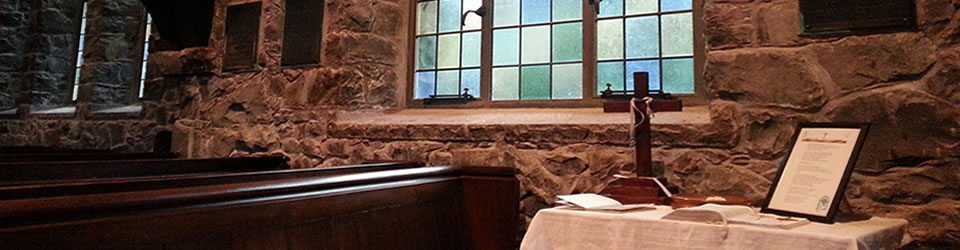
A special statement has been written to mark the bicentenary (200 year anniversary) of the first recorded preaching of the Good News (Gospel) of Jesus Christ in Aotearoa New Zealand.
FAQs
Q. Why has this Statement been written?
2014 is a veryspecial year. The arrival of the Gospel was an extremely important event for everyone in this country, whether they are Christian or not.
The bicentenary, like any anniversary, provides an opportunity to remember important events and their significance for the present day and the future. The Bicentenary Statement records and marks the arrival of the Gospel, summarises some key points in our history, and offers an opportunity to re-affirm and re-commit to the work of the Gospel in the future.
Q. What do we hope to achieve by or with the Statement?
Several things:
Mark this historic occasion – a 200 year anniversary
Record the event itself and an accurate and fair summary of the key historic events since, thereby equipping the Church with information which is unknown to many, including many in our churches. As followers of Jesus who called himself ‘the Truth’, we should know the truth of our history, including not only the sacrificial service of those who spread the Gospel and stood up for justice, but also the times when the church fell far short of her calling
Engage people throughout the discussion phase, and provide an opportunity for people to have input into the Statement wording
Offer people who identify with the statement a chance to mark the event personally by signing the Statement – individually, as a group, or more formally on behalf of any group or church they represent
By offering ministers, pastors, and individual Christians the chance to sign the Statement it is hoped that there will be a wider ownership of the document and the commitments it contains
Open up ongoing discussions with groups inside and outside the church. This may be particularly relevant with Maori who have become disconnected from church or where there are unreconciled issues
Offer hope and direction in the area of bi-cultural relationships for the future
Q. Who is behind this Statement?
The original idea came from Alistair Reese (Te Kohinga Reconciliation Network, historian-theologian) who mentioned the possibility and value of such a statement in a paper he presented at a forum at Laidlaw College in June 2013.
The idea was discussed further a few weeks later at a meeting organised by Glyn Carpenter (NZ Christian Network) with Alistair and David Moko (Baptist Maori Ministries) present.
The National Church Leaders Aotearoa New Zealand group (also known as the ‘Heads of Churches’ group) was informed of the idea at their meeting in September 2013 and were generally supportive. At that stage the thinking was that the NCLANZ group might organise the writing themselves, but in December, after discussion with the group chairman about the short time before the February 2014 NZCN Christian Leaders Congress being held in Waitangi, Glyn Carpenter organised a writing group to prepare a draft statement.
The main writer was Samuel Carpenter (Trustee, Karuwhā Trust, and no relation to Glyn Carpenter). Samuel is a qualified lawyer who also holds a masters degree in history, and currently works for the Office of Treaty Settlements. He has been taking education groups to Waitangi for 15 years and made a submission to the Waitangi Tribunal on behalf of the Nga Puhi treaty claim.
Samuel worked closely with the members of the writing group – David Moko, Glyn Carpenter, and especially Alistair Reese. Drafts of the document were circulated to a number of theologians, historians, and Maori leaders for their input, including Bishop Kito, Pane Kawhia, Dr Rangi Nicholson, Dr Rod Thompson, Dr Allan Davidson, and Dr Stuart Lange.
The writing group greatly appreciates the input of all these people. The final statement though stands on its own and any errors or deficiencies in the Statement are the responsibility of the writing group alone.
Q.What is the process for progressing the Statement?
The status of the Statement up to 31 July 2014 is a “Discussion Paper”.
English and Te Reo Maori versions of the Statement were presented at the February 2014 NZCN Christian Leaders Congress. Many leaders present would have signed the Statement at that time, but as a result of some ideas for improvement suggested at the Congress, it was decided to leave the Statement open for further comment (comments can be lodged on the NZ Christian Network website until 31 July 2014)
The Statement was presented to the NCLANZ meeting in March 2014 and leaders present were asked to distribute to key leaders in their churches and to encourage them to discuss the Statement and comment on the website
David Moko and Glyn Carpenter have taken the Statement to marae, hui, and ministers groups around the country. Road trips in May/June saw the statement presented and discussed widely throughout North and South Islands. (Check out NZ Christian Network Facebook pages for pictures of some of the towns/cities visited and leaders receiving the Statement)
In August, after all of the comments have been received, the writing group will re-convene to prayerfully consider all of the feedback, and make final changes to the Statement
The Statement will be re-presented to the NCLANZ group in September
The Statement will be re-distributed to all NZ Christian Network leaders including Regional Advocates, Advisory Group, Board of Reference, and Specialist Network leaders
The Statement will also be re-distributed to Ministers Network leaders around the country, and via websites, newsletters, and social media sites
EVERYONE who supports and identifies with the Statement will be invited, and is welcome to sign the Statement. We ask only that those who sign, take seriously the Affirmations and Acknowledgements contained in the Statement.
We especially invite national, regional, local, and organisation/group leaders to sign the Statement.
Q. Will names of those who sign the Statement be recorded?
Yes. From September onwards, there will be an opportunity not only to print and sign a personal copy, or a copy to be signed by your group (e.g. National Church Leadership team or local Ministers Network), but there will be a facility to log all names on a special web-page. All names logged on the web-page will be able to be viewed.
PICTURES! – in this visual age, it is hoped that any groups that sign the Statement will take a picture to mark the occasion. The picture could be posted on your own web and social media sites. We’d also love to re-post them on NZ Christian Network’s sites.
What is it, why does it matter and how to address it
Many Christians are unfamiliar with the concept of secularism. They have not had the opportunity to consider the threat it poses for our society – for our children, and for future generations.
This resource is designed to help readers understand what secularism is, recognise the ways it subtly shapes society, realise how it is contrary to God’s will, and discern how we should respond.
Secularism – What is it?
Online dictionaries define secularism as:
1. A system of social philosophy that rejects all forms of religious faith and worship 2. The view that religious considerations should be excluded from civil affairs or public education
The UK National Secular Society describes it as a principle that involves two basic propositions:
1. The strict separation of the state from religious institutions 2. That people of different religions and beliefs are equal before the law
Most descriptions boil down to the basic idea of keeping God out of everyday life.
This means keeping your beliefs (unless it happens to be atheism) out of the public square – which includes public debate, public policy, public institutions (e.g. government and schools), and public spaces (e.g. the workplace).
In other words… it may be OK to believe in God as long as you keep it to yourself and you keep it private. Although people like scientist Richard Dawkins would even argue against this.
There is a ‘softer version’ of secularism which allows for expression of God in public as long as no one religion is given preferential treatment. This is sometimes referred to as ‘inclusive secularism’.
Inclusive secularism could be seen as consistent with Christian faith which holds that God gives people free-will and choice and does not impose belief onto people.
But groups in New Zealand, such as the Rationalist-Humanist Society and the Secular Education Network, are active in pushing for ‘exclusive secularism’, where God and religious faith would be restricted to a ‘private’ activity.
Why does it matter?
There are two ways to look at this…
From God’s perspective,
Christian understanding is that God created everything – life, family, community, government. God is sovereign over everything, and His desire is that He would be honoured and every sphere of life would function in line with His will.
For spheres (e.g. government or education) to operate as if God is irrelevant or to relegate God to the margins or the private sphere, is not giving God the honour He deserves.
From society’s perspective,
if God is real and,
if God is the source of all justice and goodness and truth and meaning…
then it would be unwise to exclude God from the public sphere.
Therefore:
If God is treated as irrelevant it can only have negative consequences for a society that tries to live that way.
Such a society would eventually see injustice and inequality increase; goodness, respect, and compassion decrease, and standards of truth and morality undermined. It also leads to erosion of freedom of belief and conscience.
Those with eyes to see will observe some of these signs in New Zealand today.
How do we address secularism?
Recognise that ‘exclusive secularism’ is hostility to God and be prepared to engage.
Understand that ‘exclusive secularism’ is a belief system like any other, as are atheism, agnosticism, and rationalist-humanism. There is no more evidence for it being ‘true’ than for Christianity. Whereas there is good reason to argue it has much less.
Understand that public spheres that seek to suppress or exclude Christian or any other religious expression, are actually giving priority to atheism or beliefs that say God is not important in the public realm.This is the myth of ‘secular neutrality’ or the so-called ‘naked public square’ – a public square where beliefs supposedly have no place.
Highlight the unreasonableness of people who oppose any inclusion of Christian faith in public spaces when around half of the people in our country still describe themselves as Christian. Why shouldn’t schools teach the basic ideas of Christianity and the profound impact it has had, and continues to have, in Aotearoa New Zealand?
Recognise that ‘inclusive secularism’, which permits religious ideas and comments, is not a bad thing. It gives everyone freedom to share their real convictions, not just atheists and exclusive secularists.
Work together – connect to New Zealand Christian Network via the web. If you are able, consider supporting the work we do promoting Christian viewpoints in the public square.
Key point:
Everyone has beliefs. A so-called ‘naked public square’ simply advantages some people’s beliefs (a minority) over others.
It is ironic that atheistic belief should be elevated in this way given that it has been consistently shown to produce more authoritarian regimes than almost any other (e.g. most communist dictatorships in the 20th century).
Please note that comments for this post are now closed.
We’re confused about marriage. We want ceremonies with vows “till death parts us”, yet every year half as many divorce as marry.
How do you picture “marriage”?
Weddings, like Hollywood productions, present the dream of perfect couples, it’s all about love and fulfilment. But that Hollywood self-fulfilment picture of marriage isn’t true.
Another picture of marriage
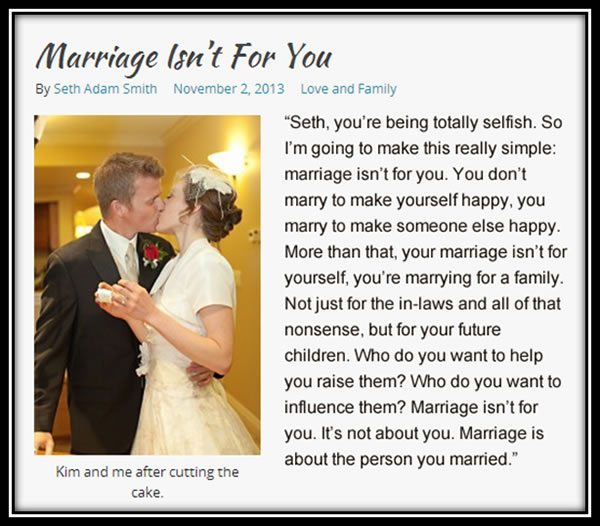
There’s another picture that surfaced last year in a blog post that went viral. Seth Adam Smith was unknown to most people until he wrote “Marriage isn’t for you”. He repeated advice his dad gave him, when he was having cold feet about marriage. The post was so popular the server crashed, and he featured on US TV news.
As the wedding approached Seth asked himself: “Was I making the right choice? Was Kim the right person to marry? Would she make me happy?” His dad’s response was sharp:
Core Bible teaching on marriage
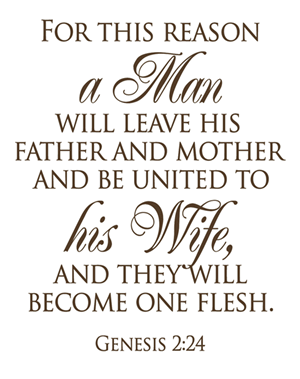
The foundation for marriage is summed up at the very beginning of the Bible, in Genesis 2.
“For this reason” refers back to the story in Genesis 2; of how God made a human being, planted a wonderful garden and put the human there to cultivate and care for it.
God also recognised that it is not good for man to be alone so He made a suitable helper for him. Let’s examine what that means:
a helper is not subordinate. In the Old Testament, almost always the strong “help” the weak. This speaks of our human need for each other.
suitable implies both “like” and “appropriate”
Animals didn’t fit the need… So God made a woman who really was: “bone of his bones and flesh of his flesh” – a helper who matches.
Marriage is a spiritual discipline
In Paul’s letter to the Ephesians, chapter 5 deals extensively with marriage and specifically quotes Genesis chapter 2. He goes on to say:
This is a profound mystery – I am talking about Christ and the church.
Marriage echoes God’s love for us in Christ. In marriage we should love as God loves us. Marriage is a “spiritual discipline”.
Seth’s dad expressed deep truths about God’s intentions for marriage.
Marriage isn’t for you. It’s not about you. Marriage is about the person you married.
That’s the Creator’s plan. Genesis 2 tells us that woman and man were “made for each other”, but Genesis 1, telling of the creation of humans, talks about the image of God.
So God created humanity in his own image, in the image of God he created him; male and female he created them.
Love and partnership between man and woman echoes the love within the Godhead. We are to love our wives or husbands as God loved us, but we are also to love and share as God does!
Talk of loving like God seems idealistic. Since Genesis 3, the world is broken by human sinfulness.
Living in a broken world: Marriages in the Bible
Think of Abraham and Sarah, they seem a perfect couple, but Sarah has Abraham sleep with a slave-girl (Gen 16:1-3), and then gets jealous (Gen 16:5). The only perfect marriages in Scripture are the ones we don’t see close enough to see the cracks.
Just as all humans are broken (sinful) and need to repent, all marriages need repentance and God’s grace – as does every other sphere of life.
Marriage can only work with forgiveness and grace – between spouses.
If you are thinking of marriage: Are you asking “Is marriage for you”, or are you ready to live for your future spouse and children?
If you are married: Are you behaving as if the marriage was “for you”? How can you change that?
If you prepare people for marriage: How do you help people understand what marriage really is, and to aim for the real thing?
Tim Bulkeley has been pastor (in England), missionary (in Congo) and taught Old Testament (for twenty years at Carey Baptist College) he and Barbara live between Tauranga and Rotorua and attend South City Baptist Church. They have four adult children and one granddaughter. Tim podcasts and has several websites including his latest project Reading the Bible Faithfully.
A friend asked me who I identified with more, Mary or Martha?
I don’t know about you but usually, when I hear someone talk about Mary and Martha (Luke 10:38-42), the focus is on Martha toiling away in the kitchen while her virtuous sister sits at Jesus’ feet. For years I longed to be more like Mary – compelled to do nothing but sit at the feet of my Lord… I’ve even cried out in prayer, “Lord, make me more like Mary!”
Eventually, I realised that this was the wrong prayer. As believers we are called to be more like Him (2 Cor 3:18), not someone else. And, by desiring to be more like Mary, I was denying who God created me to be.
One day, someone pointed out to me that the Lord did not reprimand Martha until after she complained and told Him to do something about it! In other words, it was her attitude he was addressing, not her nature to serve others.
In the preceding passage to Mary and Martha’s story, Jesus agrees with an expert of the law that we are to
Love the Lord your God with all your heart and with all your soul and with all your strength and with all your mind; and, Love your neighbour as yourself.
Luke 10:27 (NIV)
We worship the Lord when we are true to who He created us to be and we acknowledge this best when we express our worship through our native love language. Imagine if, the moment you gave your heart to the Lord, you had to learn a completely new language to communicate with Him because He couldn’t understand your native tongue…
So, what was Mary’s love language? Most likely quality time.
What was Martha’s? Probably acts of service.
On this occasion…
Was Mary loving the Lord with all her heart, soul, strength and mind? Yes.
Was Martha? Not quite… Her intentions were good and she certainly worked fervently, but her mind was distracted by dwelling on how much easier it would be if her sister was helping her – which means her heart wasn’t completely in it.
On love languages…
Granted we don’t all just have one love language, but we usually have a leaning more towards one than another. In fact, Jesus acknowledges our diverse love languages and extravagantly reaches out to us through all five:
words of affirmation – He calls us brothers amongst many other things.
acts of service – demonstrated by washing the disciples feet… He is the Servant King! Matthew 20:28, Mark 10:45
gifts – He is the giver of gifts and all good things. He gave us the greatest gift of all, salvation.
quality time – He left his place in Heaven so he could dwell with man on Earth and make provision for us to dwell with Him in eternity
physical touch – healing, comfort…
So, who do I identify with most?
Martha. I’m like daddy’s little helper who wants to serve the Lord by practically demonstrating my love and devotion. And, like Martha, I am capable of making mistakes… because I don’t always remember to engage ALL my heart, soul, strength AND mind while serving the Lord.
Can I find fulfilment in serving the Lord? Yes. In fact, I get a huge buzz when I am operating in my gifts to serve Him because I know that He is involved and invested in me. He leads, teaches, inspires and empowers me when I serve. Best of all, when I serve Him or others in His Name, I am consciously spending time with Him.
Can I find fulfilment when I sit at His feet and listen? Of course. Spending time together without distractions is essential to developing a healthy relationship.
Is one better than the other? I don’t believe we should compare them.
So, when Jesus says to Martha that Mary had chosen the better way, did he mean it was better to spend time with him by sitting at his feet and listening to him in preference to serving him? I don’t think so. He is omnipresent… and will meet us where our heart is.
Search me, God, and know my heart; test me and know my anxious thoughts. See if there is any offensive way in me, and lead me in the way everlasting.
Ideologies, “isms”, such as secularism, embrace the same concerns as the Christian gospel. They are concerned about the good life, about the purpose and meaning of being human, of living well in the world, forming communities, making moral choices etc.
This resource is designed to help people recognise a gospel by any other name.
Secularism is a belief system
An article on the New Zealand Association of Rationalists and Humanists website (reason.org.nz) states:
“The NZARH strongly believes that government should be secular; that is dealing with the issues of this world rather than following a religious agenda. Our law should not give one set of beliefs privilege over another and the state should treat religious organisations the same as any other organisation … Societies in which all people can openly express and practice their beliefs are far better places to live in than those that enforce dogma – religious or otherwise.”
The NZARH strongly believesthat government should be secular; that is dealing with the issues of this worldrather than following a religious agenda. Our law should not give one set of beliefsprivilege over another and the state should treat religious organisations the same as any other organisation … Societies in which all people can openly express and practice their beliefs are far better places to live in than those that enforce dogma – religious or otherwise.
What is secularism?
David Koyziz answers:
Secularism may be described as an idolatry which, as its name indicates, worships some created thing, or more than one thing, within the saeculum – the present age.
As Koyzis asserts, secularism is, like all ideologies, inescapably religious. Rather than equating ideology and religion, Koyzis goes on to say that an ideology flows out of the religious commitment of a person or community.
Neither the NZARH nor groups such as the New Zealand Secular Education Network can claim high ground or neutrality in this regard. There are some issues to address with regard to the statement of the NZARH for example:
The statement proceeds from faith – “the NZARH strongly believes”. This is of course inevitable with all such bottom-line statements of conviction. We believe before we affirm.
The statement characterises religion as being only concerned with issues that are otherworldly and future – not with “the issues of this world”. This is a highly contentious assumption, one that Christians, as well as followers of other religions would contest.
The statement contends that one set of beliefs should not be given privilege over others. Do the NZARH hold this to be the case in propagating their own faith position?
The statement accuses others of seeking to “enforce dogma”. Do they seek to stand above that accusation themselves?
Ideologies, “isms”, such as secularism, embrace the same concerns as the Christian gospel. They are concerned about the good life, about the purpose and meaning of being human, of living well in the world, forming communities, making moral choices etc.
Ideologies are, in this sense, gospel stories – declarations of good news. This is the meaning of “gospel”, as we find it in Scripture. It is a public word, not uniquely a Christian word. It was widely used in the first century as the proclamation of good news through the Roman Empire. The Priene inscription, from 9 BC, makes use of the word as follows:
Caesar [Augustus] through his appearance has exceeded the hopes of all former good messages [euangelia], surpassing not only his benefactors who came before him, but also leaving no hope that anyone in the future would surpass him, and since for the world the birthday of the god was the beginning of his good messages [euangelia]…
The gospel of Christ, the gospel of God’s kingdom and reign in Christ, has always been proclaimed not only as the biblical vision and promise of life but always in contention with other visions and promises, other stories of the good life, told by emperors, educators, politicians and ad makers.
Such was the case in the days of the prophets when Egyptian, Assyrian, Babylonian or Persian stories of the good life were on offer. Such was the case in the days of Jesus and the 1st century disciples when Roman versions of the gospel were widely proclaimed – peace and blessing in the name of the Caesar who was lord and saviour of the world. When Paul proclaimed Jesus as Lord, he consciously did so in contention with the alternative Lord of the day, the Roman Caesar.
What are the threats and opportunities that present themselves in this era of secularism? Surely the greatest threat is that secularism will proclaim itself as the only way; that the secular ideology will be enforced as dogma to the exclusion of other faith positions. The danger in this is that the Christian gospel will be locked out of the main arenas of public debate and decision making, as though it was irrelevant or outdated.
However, there is also opportunity in the current secular context in which many find themselves in Western nations such as Aotearoa New Zealand. In the words of Stanley Hauerwas:
I think this is a time that God is finally helping us Christians get over what is called Christendom – namely, when we thought we were in control of the world. It’s terrific. We’re discovering we’re going to be forced to learn to live by our wits. When you have power, it dulls the mind, and it dulls the intellect. We’re learning what it means to live without power. We may learn to live wittily again. When you’re not in control then you have to know those who are in control better than they know themselves in order to survive. That’s great. We can do that now in a way that I think is quite promising.
Amen. May we graciously and courageously take such opportunity.
References
Hauerwas, S. (2011). Sunday Asylum: Being the Church in Occupied Territory. The House Studio and The Work of the People.
Koyzis, David T. (2003). Political Visions and Illusions: A Survey and Critique of Contemporary Ideologies. Downers Grove, Ill. IVP.
Stenhouse, J. and Wood, G. A. (Ed’s.). (2005). Christianity, Modernity and Culture. Adelaide, Australia. ATF Press.
Rod holds a BA (Sydney University),ThL (Australian College of Theology), MEdS (Institute of Christian Tertiary Education), and a PhD from Macquarie University, is married to Rosanne and they have four adult children and two granddaughters.
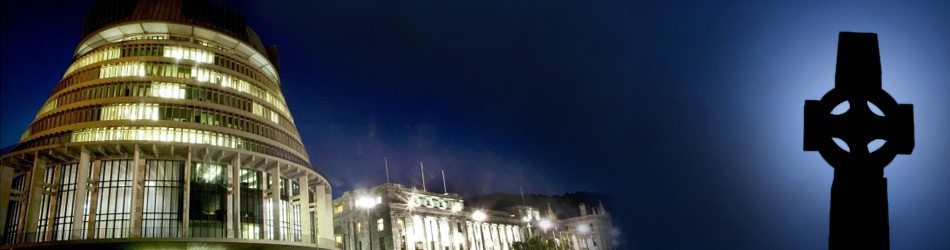
A high Celtic stone cross marks the spot in New Zealand’s Bay of Islands where Christian mission in the last land on earth to be populated by humans began two hundred years ago.
The sermon preached on Christmas Day in 1814 to a large crowd of Maori was the start of a process that led directly to the signing of the Treaty of Waitangi, February 6, 1840, and the birth of the nation of New Zealand.
Missionaries played the crucial role of midwife in this birthing process, as Craig Vernall, the national leader of the Baptist denomination, explained at the offical church service commemorating this treaty last week in Waitangi. At a congress of national church leaders I attended starting that same evening in the Bay of Islands, convening Catholics, Protestants and Pentecostals in an unprecedented spirit of unity and purpose, several historians affirmed that the treaty would never have happened the way it did without the missionaries. Evangelical missionaries initiated, translated and carried the treaty to be signed to various parts of the country.
The willingness to sign a treaty with the British government reflected the trust of the Maori people in the integrity of the missionaries.
In fact, the birth of New Zealand through this treaty can be traced directly back to William Wilberforce and his circle of social-reformer friends, including bankers, lawyers and politicians, often called the Clapham Sect. While mostly aligned with the Anglican church, they were generally viewed with suspicion by the ‘high’ church elite as evangelicals agitating to awaken the social conscience of church and nation to poverty and injustice in England and her colonies. They believed the Christian faith did not end with personal transformation but required practical social application.
Long saga
Wilberforce and his Clapham friends are best known for achieving the abolition of the slave trade in 1807 after decades of battling against entrenched elitist powers. They helped restore a sense of democracy in Britain in their affirmation of the equality of all people under God. They were also concerned about British treatment of indigenous peoples in their colonies and settlements.
Further, they were committed to promote efforts to take the gospel to the unreached, and to this end formed the Church Missionary Society in 1799, just six years after William Carey had sailed for India to pioneer protestant missions.
Wilberforce had personally recommended a young Anglican clergyman, Samuel Marsden, for a chaplaincy role in New South Wales. It was this same Marsden who delivered that first Christmas sermon on the spot now marked by the cross. Supported by the CMS in his vision to begin a mission in New Zealand, Marsden’s 1814 visit was the first of seven trips from Sydney to introduce the Christian gospel to Maori.
When Marsden expounded to his Maori listeners on Luke 2:10– Fear not: for, behold, I bring you good tidings of great joy, which shall be to all people–he was continuing the long saga of the story-tellers who had brought transformation to his own people many centuries earlier. As he and others who followed began to preach up and down the country to animists and polytheists, just as Paul, Patrick and Boniface had done in the first millennium, hearts and individuals changed, families and tribes were reconciled and society began to change, as had happened in Europe.
Unity with diversity
By the 1850’s 60% of Maori were attending church regularly, a far higher proportion than among the European settlers.
In the Treaty House at Waitangi some years ago, I read a speech of the British Resident in New Zealand, James Busby, appointed to mediate between Maori and European. When preparing Maori leaders for the signing of the Treaty, he told them that the English too had been a nation of warring tribes, until the story of Jesus had brought forgiveness, reconciliation and restitution. The English tribes had come to recognise their common identity–all of them had been created in God’s image. They needed to learn to live together in unity with diversity, to love God and their neighbour.
Events in the Bay of Islands, and subsequently throughout New Zealand, form a microcosm of the narrative of Europe.. On that Christmas day, Marsden introduced Maori to that same transforming story that gave Europe its unifying identity more than any other single factor.
To disregard the role of the gospel in shaping New Zealand, England and Europe is to distort all three stories.