My name is Craig Vernall. I’m the National leader for the Baptist Churches of NZ.
I understand from our host Bishop Kito that I may be the first Baptist to speak at this event. So thank you Bishop for the opportunity to do so.
There are 246 Baptist Churches in New Zealand.
We are a mainline evangelical movement of churches. We occupy grand buildings on Queen Street and shop fronts. We have churches in provincial towns, cafes and any old pub that’s run out of beer.
The Baptist church movement began 405 years ago in Amsterdam when a small group of separatists fled from England. There they were being persecuted for their expression of the Christian faith.
Since their outset Baptists have always been strong advocates for the Freedom of Religion, Freedom of Conscience, and Freedom of Expression. That includes all denominations and all faiths. This may explain why in a little while I’ll be reflecting upon the ministry of T.W Ratana.
– o O o –
Today, Waitangi Day, celebrates the birth of our nation. That’s why we are here, at the cradle of our beginnings. Waitingi is our nations Turangawaewae.
174 years ago we signed an agreement.
Maori – who are one parent. The Crown – the other parent. And we the Church, who served as the midwife to the Treaty being birthed by these two parents. This birth gave us something very unique.
That’s why Waitangi Day celebrations are so important. Because 2 parents return to revisit the day of birth and the birth of vision. And like any birthday, we measure how far have we come. That was a tradition in my household. Every birthday the tradition was to stand near the pantry door and measure the growth from the previous year. So we do the same as a nation. We also measure: What’s good? What’s not? How far have we grown? Asking how far we have to go?
NZ is now a diverse nation. Even in my 50 years it’s changed considerably. Different ethnicities and cultures fill our cities and towns bringing colour and difference to Aotearoa. New people from different nations all seeking a dream. In doing so they bring the world to our neighbourhoods.
Equally our young people travel overseas bringing culture home with them. That great Kiwi tradition. The great O.E. 30 years ago I returned from my 2 and a half years of O.E. I returned and showed my parents my passport with the stamps of different countries that I’d visited. Now young people return and show their parents their tattoos that they got from different countries!
When I meet a new New Zealander. Someone who wasn’t born to our country or born to our languages, I think “Lord, the parents of this nation had better get things right.”
Tangata Whenua, The Crown and the Church. So much is invested in this foundational relationship that serves our nation. Because if we sow division we will reap division…but… if we sow unity we will reap unity. Abraham Lincoln quoted Jesus Christ in a State of the Union address saying, “A house divided against itself will not stand”.
The hope that is carried within our Treaty is the hope both present and future for our nation’s prosperity. These new citizens – new cultures, look to the Treaty and ask: “This land that’s adopted me, this Mother and Father, Maori and Crown, these parents of this nation had better get it right”. For my hopes and dreams can only be achieved if the nations parents do this well. Or else this family of Aotearoa – New Zealand and it’s citizens will never fulfil our God given calling”.
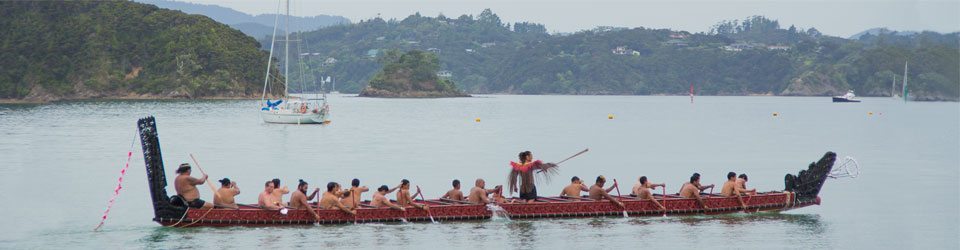
This Waka that we are all paddling in has such potential that others around the world can see it. But maybe we don’t?
Our story of nationhood is a terrific story. Other nations would love to have our story. Other nations have had centuries of war and conflict. By comparison our nation has had a terrific but staggered start. It’s where we go from here that counts.
The Treaty of Waitangi is more than a partnership. In fact we belittle the Treaty by calling it a partnership. The Treaty of Waitangi is a covenant. A covenant is binding beyond the level of mutual convenience. Beyond simple partnership.
The Christian story talks knowingly about covenant. Covenant in the scripture always speaks about death being an essential part of a covenant. Biblical covenant always contains a death of some sort. Death to self or death by someone or something.
The central message of the Gospel, the Christian covenant, involves the death of Jesus. When he voluntarily gave up his life on a Roman cross to die for the sins of the world. A covenant – sealed in the blood of Christ. For those who put their faith in His sacrifice for their sins. A covenant for all those who believe upon him. Because death is irreversible, making the Christian covenant immutable, unchangeable, everlasting. A Covenant made by God. But founded in the death of his son Jesus.
For our Treaty covenant to be successful it requires an on-going death. That is: Death to self – or death to any claim to cultural superiority. This, we all know, has been our weakness. The Crown now freely admits this history. But the Church – the midwife, also needs to remember its place in this story – the good and the bad. The church was an integral player in the original Treaty process. But we haven’t always fulfilled our God given responsibility.
We must remember that only 39 Maori leaders signed the Treaty here on these grounds 174 years ago. What’s important to remember is that 500 more signatures were solicited throughout this nation by missionaries (of Anglican, Methodist and Catholic denominations) who travelled the length and breadth of the country with copies of the Treaty. Yes, the Treaty was born here at Waitangi, but the labour pains of birth continued for months as the Church – the midwife – gathered the signatures needed to ratify the Treaty. Going from tribe to tribe, Chief to Chief – forging this new covenant.
Sadly, with the passing of time, the Church – now of all denominations, failed in its responsibility to nurture this new born Treaty into maturity. That’s why the Treaty today has yet to reach its fullness. It was not parented well by one of the parents or remembered by the midwife.
Time – unchallenged will always see us default to the old Adamic nature, to the Garden of Eden where self-interest prevails over “death to self” or covenant. Death or death to self has its own mystery that brings depth and reflection, honesty and vulnerability. Covenant means death; to self and the serving of our own interests.
A personal experience that my family is living with now illustrates this point. Four years ago our daughter married a terrific young Australian named Karl. One year ago, at the age of 24 Karl was diagnosed with Leukaemia. Three weeks ago he was told that there was nothing more the doctors could do for him. For our family this has brought an enormous level of depth, reflection, honesty and vulnerability. Any selfish ambition is exchanged for seeking the best for each other. It’s both a challenging and surreal experience that we are having with Karl, our daughter Brittany and God.
In the Bible, there is a confusing sentence of scripture found in the book of Ecclesiastes.
It is better to go to the house of mourning than to go to the house of feasting.
These words by King Solomon make sense to me now. For through our own experience with Karl we’re growing in understanding about how “the house of mourning” sadly brings it’s deeper rewards.
Ratana
In this nation during the 1920’s and 1930’s – “The house of mourning” belonged to Tahupotiki Wiremu Ratana. This prophet was accredited to us by God with signs and wonders following. Ratana’s healing ministry was astounding and the Ratana museum is still filled with crutches and wheelchairs. These being the evidence of people being healed as he prayed for them. Historians will tell us that it was through petty jealousies that caused the mainline Churches to abandon him. In spite of their doctrinal differences.
However throughout his ministry, Ratana had two goals. Ture Wairua – The ministry of the Spirit and Ture Tangata – The ministry for the people.
Ratana was deeply troubled about the Treaty or the lack of its presence. Ratana was a burden bearer – an intercessor, he heard and carried the pain of his people. In 1924 Ratana took a petition to London to seek an audience with the King and the League of Nations. Ratana had collected 40,000 signatures. These represented nearly three quarters of all Maori. But no one gave him any time. London ignored him. The New Zealand government worked hard to block his efforts.
Later in 1935 Ratana went to Parliament and presented to Prime Minister Michael Savage four symbols. Two of these symbols were a potato and a broken watch. He carried the potato – symbolising the land that was taken and how Maori could no longer feed themselves. The broken watch – symbolised the Treaty that was broken. It no longer worked and wasn’t being honoured.
Little was heard and even less was done to right the injustices that Ratana identified.
The Treaty of Waitangi was seen as history – no longer needed. Sadly it was cultural superiority by both the Government and the Church that caused us to miss an opportunity to begin to reconcile this Treaty covenant.
So I ask the question. How different would our nation be today if we had listened to the burden for our nation that Ratana carried those years ago? How much better off and further ahead would our nation be if during Ratana’s time 80 years earlier had we became serious about our Treaty?
A missed opportunity – that undoubtedly scarred Ratana and his people. The distance we see today that still separates Ratana from the mainline church still reflects this rejection and disappointment. Much more needs to be said and much more needs to be reconciled
But the call to us is still evident. That’s why we are here today – The Treaty is a gift from God.
So as two parents and a midwife we must continue to make covenant by laying aside our temptation for cultural superiority. We must listen to each other in the “House of Mourning”. Jesus said, “No greater love is there than this than to lay down ones life for his brother”– seeking each others highest in a spirit of Christian forgiveness and reconciliation. Ensuring that each generation hears the story that God has given to our Nation – and for us to continue to write our own chapter with the heart of putting others first.
We need to feel the pain that Ratana carried in his heart for our Nation. We need to be burden bearers, intercessors for the travail of our nation in the way that Ratana first did.
His vision took our story to London and the League of Nations. God’s vision brings us here today so we can capture afresh the spirit of humility with which and only which – we can make this journey together.
May God bless us all.
Craig Vernall is the National Leader for Baptist Churches of New Zealand
This is an abridged copy of the message he shared on Waitangi Day, 6th Feb, 2014 at Waitangi, Northland, NZ
It was great to catch up with Kiwi-International Jeff Fountain (Schuman Centre, Europe) last week in Auckland. Jeff was a keynote speaker at the 6th NZCN Christian Leaders Congress in 2011 and is registered for the 7th Congress later this week in the Bay of Islands, so it will provide another opportunity to talk face-to-face about recent developments aimed at reducing harm caused by the sex-trade.
A sea-change is taking place in the way Europeans view prostitution.
In an almost too-good-to-be-true-report, the European Parliament announced it will vote later this month on criminalising clients rather than the sex workers.
“Because marriage is a gift of the Creator, uniting a man and a woman, and affirmed by Jesus himself, intended for the birth and nurture of children and for building up human families in mutual support and care, it is a lifelong commitment.
Such marriages generate growth in oneness of heart, body, and mind, and provide stability to family life, so that children are cared for lovingly and grow to full maturity. In this way marriage is foundational to a good society.”
NZCN Healthy Marriage discussion group, 2013
Marriage – Why it matters
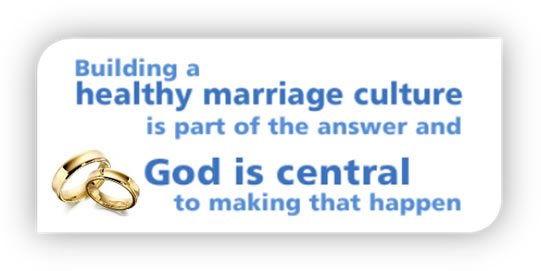
Healthy marriages are a foundation for strong families and strong communities.
Evidence strongly suggests that outcomes for children, on a range of social and emotional indicators, are better when parents are married. And outcomes for adults who are married are generally better than in other co-habiting arrangements.
Many parents achieve exceptional outcomes despite divorce, bereavement, or children born outside of marriage.
But this does not alter the statistics that show better outcomes for marriage.
Marriage involves a publicly declared commitment which is a stronger basis for the security which enables children to grow and flourish than uncommitted relationships.
Marriage creates a unit that performs better financially and economically. This not only benefits those in the family but also increases the likelihood of a beneficial impact for society.
Marriage statistics suggest a correlation with lower rates of violence and domestic violence. These are problems that plague our society.
Marriage – where is it heading?
The rate of marriage has declined over recent decades in favour of casual and de facto relationships. This has gone hand-in-hand with a rise in the rate of divorce.
Some people focus on recent challenges to the legal definition of marriage as a factor in the erosion of marriage. But this is more a symptom than a cause of the problem.
Andrew J. Cherlin, Professor of Sociology at Johns Hopkins University, says that two shifts occurred around the start of the 20th century – over 100 years ago – that have had a serious impact on marriage. (Andrew Cherlin, The-Marriage-Go –Round, Vintage Books, 2010)
Radical individualism – making self-interest the top priority
‘Companionate marriage’ – the notion that marriage is just about adult companionship, exacerbated today by the idea that romantic love is sufficient basis to get married.
If the present common attitude to marriage is not changed for a better one that appreciates the importance of marriage, the best we can expect is that the situation will drift along – maybe a bit better at some times, maybe a bit worse at others.
At worst, we may see a continual slide over time away from marriage, from commitment, and from God.
What do we need to do?
Commit to doing what you can to change things.
Recognise that marriage between a man and a woman is part of God’s created order. As such it is relevant for everyone – not just Christians or ‘religious’ people.
Learn about God’s purpose, plan, and provision for marriage.
For those who are married, commit to building your marriage based on God’s plan, as a model and encouragement to others, and a witness to God.
Be available to help others, especially younger marrieds.
Talk about marriage – especially to those who don’t know God or who haven’t had good role models.
Celebrate marriage – in your churches, and even better – outside your churches, in the community.
Work together – connect to New Zealand Christian Network via the web. If you are able, consider supporting the Network and the work we do promoting Marriage Week.
Mark Marriage Week 7-14 February each year in your calendar.
Check outTowards a Strategy for Building a Healthy Marriage Culture on www.marriageweek.org.nz – This is a short paper developed by the Healthy Marriage Discussion group organised by New Zealand Christian Network. Please offer any comments or suggestions you have.
If you agree with the Christian Marriage Commitment that forms part of that statement, please go to the website and register your support. Tell your church and friends about it!
Marriage involves a publicly declared commitment which is a stronger basis for the security which enables children to grow and flourish than uncommitted relationships.
Marriage creates a unit that performs better financially and economically. This not only benefits those in the family but also increases the likelihood of a beneficial impact for society.
Marriage statistics suggest a correlation with lower rates of violence and domestic violence. These are problems that plague our society.
European Dignity Watch reported yesterday on a significant decision that has implications for New Zealand and other liberal democracies.
Extract from the report
After a months-long intense debate about the ‘Report on Sexual and Reproductive Health and Rights’ (also called the Estrela report), a symbolic fight has been won today for democracy, for children, and for life. A majority of the European Parliament have just adopted the alternative resolution tabled by the EPP group and joined by the ECR group, and thus rejected the highly controversial report (with 334 votes in favour, 327 against and 35 abstentions). This is a historic setback for the abortion lobby and all their related stakeholders, as they have well-oiled machineries, huge EU-funded budgets and, therefore, great power of impact in political agenda setting.
Usually, such a non-binding report (that is precisely done for symbolic reasons and to create justifications for new laws and funding) would have passed plenary right away and without much attention, despite its radical content that disrespects the principle of subsidiarity, promotes a “right to abortion” against EU law, infringes the rights of parents and the freedom of conscience of doctors. Since all this comes in the guise of “women’s health”, who can be against it?
This time, however, things went differently: citizens in Europe are no longer willing to be dictated an agenda that goes against their profound convictions: parents who don’t accept to be pushed away as the primary educators of their children and who want to give their children love and education, not aggressive and inappropriate sex education and contraception; citizens who want the European Parliament to respect democracy and the boundaries of EU law; doctors and nurses who do not want to be forced to perform abortions.
I was introduced to the concept of mentoring in my early 30’s. A man whom I esteemed highly asked if I would be interested in a discipling relationship. Up till then I recall no one intentionally helping me walk more closely to Christ. He proposed a weekly meeting at the Auckland Harbor Bridge and that’s what we did – every Monday for six years! The model he followed was that I was the learner, he the teacher.
This more-mature to less-mature model has great biblical warrant: Moses to Joshua, Naomi to Ruth (or was it the other way round?), Paul to Timothy to name a few. This model is however quite limiting. The number of people who are available and confident enough to mentor those less mature is, in my church experience, scarce.
A few years ago, I realized that God was teaching me a more freeing and fluid approach: mutual mentoring(two or more people who come to listen and learn from each other and the Lord). It happened as I started meeting with a young pastor-friend called Don Overton. From day one he spoke into my life and I his. Our relationship became a two-way street.
How did this happen? Essentially it is an attitude, where two people, regardless of age or maturity-stage, meet humbly to experience the biblical one-anothers. Mutually they encourage one another, submit to one another, pray for one another, confess their sins to one another, and build each other up. God graced Don and I with that attitude.
The benefits are huge. No longer do you need to search for a mentor-guru. Mature mentors are a blessing from God (especially when they humbly come to listen and learn), but they are few and far between. All you need to do is ask, “Who is in my relational network that God may be ‘giving’ to me?” Jesus talked that way when he prayed to his Father, before he was crucified. Speaking of his 12 disciples, he said, “I pray for them. I am not praying for the world, but for those you have given me… (John 17:9). We are not designed to be in a mentoring relationship with hundreds, just a few. Pray and ask God to lead you to someone you could mutually mentor.
What are some of your experiences as you have searched for a mentor? What do you think of the concept of mutual mentoring?
Rowland Forman is primarily a mentor to pastors. Currently he leads Living Stones Leadership Ministries in New Zealand. He and Elaine have three children and seven grandkids. This year he published “The Lost Art of Lingering: Mutual Mentoring for Life Transformation” www.rowlandforman.com
Parents and board trustees need to be aware that the Bible in Schools program does not breach anyone’s human rights and is entirely consistent with an inclusive secular education system. Furthermore, it provides an important context for teaching values that are needed in our society.
Summary of a Symposium on Religion in Schools, held on Tuesday 15th October.
The NZCHR, generously hosted by DLA Phillips Fox, presented the Symposium on Religion in Schools. While the topic has garnered attention numerous times over the years, it is of current interest due to its recent exposure in the media. The event was chaired by John Hannam, partner at DLA Phillips Fox, and the question and answer session was facilitated by former Chief Human Rights Commissioner, Rosslyn Noonan. The panel consisted of three expert speakers; Peter Harrison, Simon Greening and Paul Rishworth.
Summary of Presentations
Peter Harrison, a Councillor of the New Zealand Association of Rationalists and Humanists and founder of the Secular Education Network, discussed his concerns in regard to the transparency, or lack of, in the religion in schools programmes. He noted that the names of such programmes were often ambiguous and parents were not aware of what was being taught to their children. Additionally, children typically had to be opted out. Again, this was something that was not always clear to parents. He questioned whether children were being educated or indoctrinated. While Peter believed that children should be taught about faiths of all kinds and that there should be freedom of belief, he was uncomfortable that it was primarily Christianity being taught, and that it was being communicated as the one true faith. He noted that state education is secular and that to allow religious instruction in the school environment went against that principle. CEO of the Churches Education Commission (CEC), Simon Greening, spoke on the changes that CEC are making in terms of their religious education programme. He outlined the functions of CEC which included training, resourcing and managing their volunteer teachers. He was aware of past problems and stated that religion in schools programmes have modernised and accepted that there are a variety of beliefs. He explained that there is great oversight of their volunteers and firm policies are in place regarding how lessons are presented. Reforms to the programme are on-going to ensure what is being taught is done sensitively, as well as being made relevant to children today. He proposed that the current legal position struck the correct balance between the right of a person to express their religious belief in a public place and the right of school students not to be discriminated against because of their belief. Simon stated that ultimately it was up to the school Board of Trustees, who are elected by their community, to decide whether there is a place for religious education in schools. Paul Rishworth, Professor at the University of Auckland, discussed how religious education fitted in under the law, and in particular under the Bill of Rights Act 1990. He explained how religious instruction in schools is still allowed under the Education Act 1964 before going on to explore whether this was defensible/lawful. First he acknowledged some theories and approaches to the state and religion; total separation of the state and religion, and equality and neutrality on the part of the state regarding religion. Paul suggested there were three possible courses of action in regard to religion in schools – mounting a legal challenge to the law, interpreting the law in a rights-consistent manner, and applying the law in practice in a rights-consistent way. Challenging the law on the basis that the state and religion should be completely separate may possibly result in a declaration of a breach of the Bill of Rights, but the law would not consequently be invalidated. The other two approaches focused more on the idea that the state should play a neutral role when it came to religion. Regarding the interpretation of the Education Act, the relevant section could be interpreted as embracing all religions and therefore could be consistent with the right to freedom of religion. Finally, if the Education Act is lawful then, in its application, it must be consistent with freedom of religion. This includes having a clear ability to opt in/out and having legitimate alternatives for students who did not participate in the programme. It therefore appeared to be something that was defensible/lawful. A question and answer session followed the presentations and many members of the audience contributed with thoughtful queries and comments. There was a significant turn-out and the event was well-received. It was particularly appreciated that each speaker had something very different to bring to the table, making for a fair and balanced discussion.

 Tena Koutou, tena koutou katoa.
 174 years ago we signed an agreement.
 When I meet a new New Zealander. Someone who wasn’t born to our country or born to our languages, I think “Lord, the parents of this nation had better get things right.”
 The Christian story talks knowingly about covenant. Covenant in the scripture always speaks about death being an essential part of a covenant. Biblical covenant always contains a death of some sort. Death to self or death by someone or something.
 We must remember that only 39 Maori leaders signed the Treaty here on these grounds 174 years ago. What’s important to remember is that 500 more signatures were solicited throughout this nation by missionaries (of Anglican, Methodist and Catholic denominations) who travelled the length and breadth of the country with copies of the Treaty. Yes, the Treaty was born here at Waitangi, but the labour pains of birth continued for months as the Church – the midwife – gathered the signatures needed to ratify the Treaty. Going from tribe to tribe, Chief to Chief – forging this new covenant.
 In this nation during the 1920’s and 1930’s – “The house of mourning” belonged to Tahupotiki Wiremu Ratana. This prophet was accredited to us by God with signs and wonders following. Ratana’s healing ministry was astounding and the Ratana museum is still filled with crutches and wheelchairs. These being the evidence of people being healed as he prayed for them. Historians will tell us that it was through petty jealousies that caused the mainline Churches to abandon him. In spite of their doctrinal differences.
 So I ask the question. How different would our nation be today if we had listened to the burden for our nation that Ratana carried those years ago? How much better off and further ahead would our nation be if during Ratana’s time 80 years earlier had we became serious about our Treaty?
 Craig Vernall is the National Leader for Baptist Churches of New Zealand
This is an abridged copy of the message he shared on Waitangi Day, 6th Feb, 2014 at Waitangi, Northland, NZ
Craig Vernall is the National Leader for Baptist Churches of New Zealand
This is an abridged copy of the message he shared on Waitangi Day, 6th Feb, 2014 at Waitangi, Northland, NZ

 Marriage – where is it heading?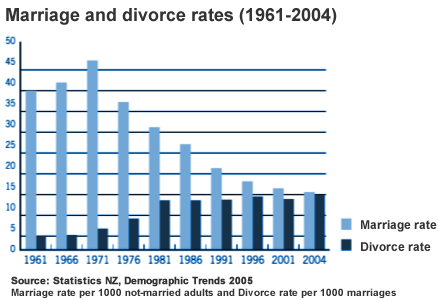
 For those who are married, commit to building your marriage based on God’s plan, as a model and encouragement to others, and a witness to God.