World Medical Association reaffirms its opposition
Jurisdictions which permit assisted suicide or euthanasia suck all the oxygen out of media coverage of this topic. To put the issue in perspective, assisted suicide or euthanasia is only legal in Canada, Belgium, the Netherlands, Switzerland and a handful of American states. Nearly everywhere else, doctors have repudiated it.
As a reminder of this, the World Medical Association has reaffirmed its long-standing policy of opposition to euthanasia and physician-assisted suicide. At its annual Assembly in Tbilisi, Georgia, the WMA adopted a revised Declaration on Euthanasia and Physician-Assisted Suicide. It states:
“The WMA reiterates its strong commitment to the principles of medical ethics and that utmost respect has to be maintained for human life. Therefore, the WMA is firmly opposed to euthanasia and physician-assisted suicide.”
Furthermore, the WMA strongly supports conscientious objection. Its statement says: “No physician should be forced to participate in euthanasia or assisted suicide, nor should any physician be obliged to make referral decisions to this end.”
On the other hand, the WMA also supports the right to refuse burdensome treatment. “The physician who respects the basic right of the patient to decline medical treatment does not act unethically in forgoing or withholding unwanted care, even if respecting such a wish results in the death of the patient,” it states.
WMA Chair Frank Ulrich Montgomery, a German physician, summed up the feeling of the medical profession on a global level: ‘Having held consultative conferences involving every continent in the world, we believe that this revised wording is in accord with the views of most physicians worldwide.’
End-of-life care has been at the centre of heated debates within the WMA. Last year the Canadian and Dutch delegations to the WMA’s assembly failed in a bid to change the organisation’s stand to neutrality, rather than opposition. As a result, the Canadians pulled out of the WMA. There is sure to be on-going pressure for the WMA to change its position.
So it’s significant that earlier this year, the WMA’s official journal published a strong rebuttal of arguments for neutrality. It stressed that the proportion of doctors who back the Canadian approach was minuscule:
“Only a small minority of physicians support E&PAS. The vast majority of doctors around the world wish only to foster the will to live and to cope with illness and suffering, not to facilitate acts of suicide or to create ambiguity around what constitutes a medical treatment. We must remember that the four regional WMA symposia demonstrated that most doctors would never be willing to participate in euthanasia.”
The WMA statement coincided with another statement, this time from a religious angle. Representatives of the three Abrahamic religions – Christians, Jews, Muslims – signed a declaration in the Vatican repudiating euthanasia and assisted suicide. It is an extraordinary demonstration of ethical unity on a deeply controversial topic by theologically separate groups. Their declaration says:
We oppose any form of euthanasia – that is the direct, deliberate and intentional act of taking life – as well as physician assisted suicide – that is the direct, deliberate and intentional support of committing suicide – because they fundamentally contradict the inalienable value of human life, and therefore are inherently and consequentially morally and religiously wrong, and should be forbidden without exceptions.
The statement also stresses the importance of palliative care and of trying to ensure that patients do not feel useless at the end of their lives.
The signatories included Vatican officials, Avraham Steinberg, co-chair of Israel’s National Council of Bioethics, Samsul Anwar, chairman of the Central Committee of the Indonesian Muhammadiyah and Orthodox clergy.
Michael Cook is editor of MercatorNet
This article by Michael Cook was originally published on MercatorNet under a Creative Commons licence. The original article can be found here.
Submissions closed Midnight Thursday 19 September 2019
While it is easy to agree and disagree with other people’s opinions, it’s actually rare for someone to take a stand and speak up either in support or against an issue in a way that counts. Why? Sometimes, it’s because they think their voice doesn’t really matter. Sometimes they are scared to let others know what they really think because it might not agree with the overruling sentiment. And sometimes, they really just don’t know how to go about it.
When it comes to issues that affect society, often the best way to be heard is to add weight to the voices of others.
At the beginning of our submission, we acknowledge this is a painful issue.
For many people, abortion is a very painful and divisive issue. Convictions and feelings run deep. Many find abortion tragic. Others, finding themselves unexpectedly pregnant, have been thrown into a life crisis. In anguish and fear, they have agonised over whether or not to seek an abortion and have had to live with that decision ever since. Some grieve for family members who were never born. Many people alive today are aware that they could have been aborted but are pleased they were not. We acknowledge that all those who proceed with unwelcome pregnancies need strong support from others, and those who have undergone an abortion need compassionate understanding.
A few weeks ago, we shared a post by Alex Penk of MAXIM Institute called “Removing rage from our public debates” in which he highlights the tendency for people to “Rage against the machine. Stick it to the man. If you’re not for us, you’re against us.” He points out that theses familiar sayings are sometimes comforting, especially when our nation is in the thick of debate about issues that really fire people up—euthanasia, cannabis, and most recently, abortion. We recommend reading this article before you sit down to write your submission.
CURRENT LAW vs PROPOSED LAW source www.chooselife.org.nz
What is the current abortion law in New Zealand?
Under the Crimes Act 1961, it is a crime to perform an abortion unlawfully, or to supply the means of providing an abortion (such as drugs or instruments) unlawfully (ss. 183 and 186). Women are explicitly exempt from liability, meaning a woman cannot be criminally charged for having an abortion under the Crimes Act 1961. However, under s.44 of the Contraception, Sterilisation and Abortion Act 1977, it is a crime for a woman to receive an abortion unlawfully. Thus, performing, receiving or supplying the means of providing an abortion is a crime only when it is not carried out in accordance with the proper procedure and legal criteria for lawful abortions.
What are the criteria for a lawful abortion?
In the case of a pregnancy of not more than 20 weeks’ gestation, a lawful abortion may be performed if one of the following criteria are met:
Serious danger to the woman’s life, physical or mental health (factors which may also be taken into account: the woman’s age, and whether the pregnancy is the result of sexual violation); or
Foetal abnormality (a substantial risk that the baby will be “seriously handicapped”); or
The pregnancy resulted from incest or sexual intercourse with a dependent family member; or
The woman is “severely subnormal” (has a mental, physical or intellectual impairment that significantly impairs her ability to understand and make decisions about sexual conduct). (Crimes Act 1961, s.187A(1))
In the case of a pregnancy of more than 20 weeks’ gestation, a lawful abortion may be performed only when it is necessary to save the woman’s life, or prevent serious permanent injury to her physical or mental health. (Crimes Act 1961, s.187A(3))
Are women currently ‘criminalised’ for having abortions in New Zealand?
No. Under the Contraception, Sterilisation and Abortion Act 1977, it is a crime for a woman to receive an unlawful[i] abortion in New Zealand (for example, a ‘backstreet’ abortion). This offence creates some individual responsibility for women who attempt to bypass the proper criteria and procedure for lawful abortions (albeit with a relatively low penalty of a maximum fine of $200). Importantly, since 1977 when the current law was enacted, the Ministry of Justice has no record of any woman ever being convicted for receiving an unlawful abortion. It is therefore wrong to say that women are ‘criminalised’ for receiving abortions under the current law.
Who then is ‘criminalised’ under New Zealand’s current abortion laws?
According to the Law Commission, there is no record of any case in which a person has been convicted for performing an unlawful abortion. There has been a small number of convictions under s. 183 for procuring (i.e., performing) an unlawful abortion. However, Ministry of Justice records show that these related to physical assaults on pregnant women that caused (or were intended to cause) a miscarriage – not medical or surgical abortions. There has been one conviction for providing the means of procuring an unlawful abortion (for supplying pills illegally).
Does New Zealand have ‘abortion on demand’?
Not officially. By law, there is no automatic ‘right’ to have an abortion. However, in practice, there is evidence to suggest that abortion is more accessible than the law would appear to allow, because certifying Consultants adopt a very wide interpretation of the ‘mental health’ ground for abortion. Most abortions are provided on this ground. New Zealand’s annual abortion rate is comparable to jurisdictions with ‘health’-oriented abortion laws, which may suggest that a high percentage of requests for abortion are granted.
Former Chair of the Abortion Supervisory Committee, Dr Christine Forster, said, “We do essentially have abortion on demand or request, however you like to put it. […] Certainly in the main centres, in Auckland, Wellington and Christchurch, if a woman wants an abortion I think she’ll get one.” [ii] The Hon Judith Collins has stated in Parliament, “To be absolutely frank, we have abortion on demand in New Zealand, in everything except name.” [iii]
PROPOSED ABORTION LAW
What changes are proposed to abortion law?
The Government has proposed a policy shift to treat abortion as a ‘health’ issue rather than a criminal issue. This would involve removing the criminal offences regarding abortion and treating abortion like other health services, which are governed by general health laws and professional guidance.
Why does the Government want to reform abortion law?
The focus of this policy shift is entirely on the ‘wellbeing’ of women seeking abortion. The Government seeks to remove the element of censure that the criminal law entails, and to make abortion more accessible, with fewer delays. The Government does not appear to have considered the status of a foetus, nor any State interests in preserving life. Under the current law (Crimes Act 1961), an unborn child is afforded some recognition and (minimal) legal protection. In contrast, treating abortion as a health issue and removing it from the Crimes Act 1961 gives the unborn child the same status as an appendix, tonsils or gall bladder – simply tissue removed as part of a ‘health procedure’.
What would a new abortion law permit?
Does this mean late-term abortions will become legal?
‘Late-term abortion’ is a term used to describe abortions from the second trimester of pregnancy onward. Some use this term for abortions performed from 16 weeks (including the Law Commission), and others use it for abortions performed after 23 weeks (related to viability). Late-term abortions are already legal in some circumstances (see para 3 on previous page), and data provided by Statistics NZ shows that that more than 850 late term abortions have been performed over the last 10 years where there was no >danger to the physical health or life of the mother.
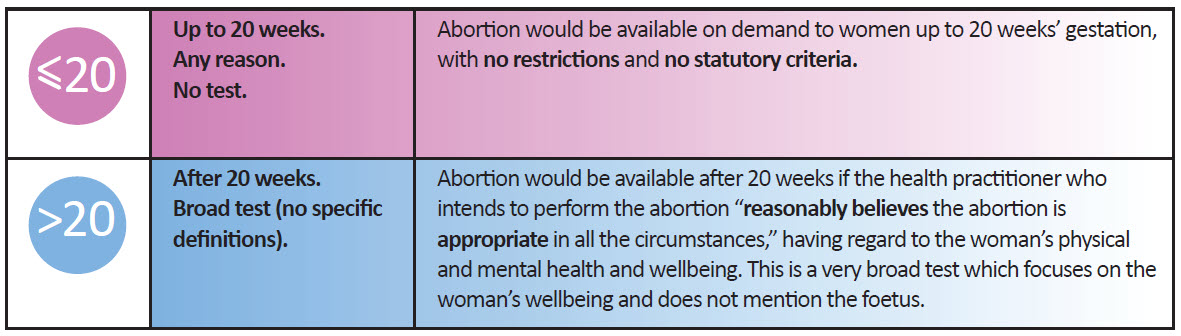
The Abortion Legislation Bill would make late term abortionsconsiderably more accessible than they are under the current law. After 20 weeks’ gestation, a baby could be aborted as long as the health practitioner who intends to perform the abortion considered that the abortion was ‘appropriate in the circumstances’.
What do the proposed models for abortion law reform leave out?
The Abortion Legislation Bill leaves serious gaps. No provisions are proposed to protect women from being coerced into an abortion. No provisions are proposed for ensuring women have the mental-health support they need before and after abortion, or that women are made fully aware of the risksofabortion, and of all of their options. There’s no proposal to prevent schools from taking young women for an abortion without parental knowledge, or to prevent sex-selective abortion. The Bill also waters down the freedom of conscience rights for health practitioners, who would be required to provide information to women about abortion service providers. It is proposed that employers could terminate a health practitioner’s employment, refuse to employ a new job applicant, or offer health practitioners less favourable terms of employment, conditions of work, or opportunities for training if the employee’s or job applicant’s conscientious objection to abortion would “unreasonably disrupt the employer’s activities”.
The bill would also remove the current 20-week gestational time limit for disability. Instead, abortion will be available for disabilities including Down syndrome right through to birth, providing one registered health practitioner signs off on the abortion under the new ‘well-being’ grounds. In the handful of jurisdictions that have similar laws, this has in practice allowed for abortion for disabilities including Down syndrome right through to birth. In 2017, the organisation Saving Down’s highlighted their concerns around Jacinda Ardern’s pledge to change abortion laws, saying that this would introduce abortion through to birth for babies with disabilities. In response, Jacinda Ardern made a commitment to not increase the time limit for disability-selective abortion.
How to make a submission on the Abortion Legislation Bill
The Government appointed Select Committee needs to hear from thinking members of the public. The reality is, if people do not make a submission, silence is interpreted as assent.
It is very important that all submitters write in their own words, rather than cut and paste from other sources. Form letters carry little very weight.
It is also crucial that submissions be respectful, reasoned, and to the point.
Check each bill for the correct information to address the Committee Secretariat and include:
Your name
Heading: “SUBMISSION – Name of Bill”
Your own details: Name of Individual / Family / Organisation Address Phone
Your signature
Whether or not you wish to make a verbal submission, appearing before the committee (YES / NO)
Writing to your MP does not count as a submission but does let them know where you stand on this issue.
Please note that submissions are made public unless you specifically request anonymity at the time of putting in your submission
Issues to consider
Remember, there are people on both sides of any debate. Be respectful. Even opposition can be constructive.
Pray before you write. If you get stuck, pray. When you finish, pray. Sit on it until you feel you have expressed yourself well and pray for the recipients to be open to hearing your heart when they read your message.
Double-check your evidence and provide sources. Ambiguous arguments are easily dismissed and can be detrimental to the overall message other people send.
Demonstrate grace.
Give encouragement and support when MPs make a stand or go against the majority or party line – especially on conscious votes. Theirs is often a thankless task. Pray for them to be strong under the pressure they face.
A guide on what to write on the blank side of your submission form
Suggested openings FOR
I support the… I want Parliament to legalise… I am totally for… … should be legalised because… I want the ________ because… I agree with what this Bill stands for because… I agree with making ________ legal because… I am for________ because… I support any sort of… I support the passing of this Bill because…
Suggested openings AGAINST
I oppose the… I don’t want Parliament to legalise… I am totally against… … should remain illegal because… I don’t want the ________ because… I am against what this Bill stands for because… I oppose making ________ legal because… I am against ________ because… I oppose any sort of… I oppose the passing of this Bill because…
REASONS
Add 2-3 reasons and evidence, if available, to support your view. Ensure your evidence is reliable and provide the source. Personal experience also carries weight.
Instructions to help leaders organise submissions
Before the Submission-writing Session
Print one form template for every person.
Gather a small team of helpers who can assist your congregation.
Announce in the Notices that there will be an opportunity to make a brief submission at the end of the service. If anyone is able to speak briefly about the Bill, that would be excellent.
Please provide a good supply of ballpoint pens.
Each person needs to write their name and other contact details on the front.
If a person wishes to speak to the Committee to explain their viewpoint further (ie making an ‘oral submission’), they should make sure they tick the appropriate box.
At the back of the form, people should write their message (see the guide for ideas).
Office or Supervisor Role
Photocopy the back of the form (the side with the handwritten message).
Staple each of the photocopies and their respective forms together.
Put all the forms into an A4 envelope. Put $3 postage on the envelope.
Write the address on the envelope: Committee Secretariat Abortion Legislation Committee Parliament Buildings Wellington
Please mail the envelopes and allow a week for post If you live in Wellington, you can take the envelopes to Parliament in Molesworth Street and give them to the reception desk. You don’t need stamps on if you drop them off, but you do need to write the address on the envelope. Parliament should take envelopes until the closing day.
Dr Norman MacLean NZOM qualified in medicine at the Otago Medical School 50 years ago. He practiced within obstetrics & gynecology for nearly 40 years, working for a number of years at the Southland hospital as a junior doctor, then National Women’s Hospital in Auckland, followed by two years as a junior specialist or registrar in obstetrics & gynecology at the National Specialist Service in Dundee, Scotland.
Following his time in Dundee, he returned to Southland & practiced 38 years as a specialist gynecologist and obstetrician in Southland. During that time, he has done in the area of 8000 births, including 2000 caesarian sections. He performed up to 200 abortions early in his career, but after a year of performing the abortions & being somewhat uneasy but cooperating with the system, he realised that this is not what he should be doing. It was not the medicine or the life giving, healing medicine that he wanted to practice & from that day he stopped.
In 2015, Dr Norman MacLean was named a member of the New Zealand Order of Merit in the Queens Birthday Honours for services to obstetrics and gynaecology.
Hear the truth about the reality of abortion including late term abortions, the risks and harms of abortion to the mother, the importance of the heartbeat, foetal pain, the age of viability, and NZ’s close connection to operative procedures performed on the unborn child during pregnancy.
“With the proposed new law, it would seem that the mother has all the rights & no recognition of the existence of the baby, the life of the baby, or the value of the baby is considered. It’s shocking beyond belief.” – Dr Norman MacLean NZOM
We are writing to you as mothers – and as women who have experienced abortion.
We identify with the joy your baby has brought you and Clarke this past year. Hearing her heartbeat for the first time. Deciding on a name. And now enjoying her smiles and the softness of her skin. The whole nation truly shares in your happiness.
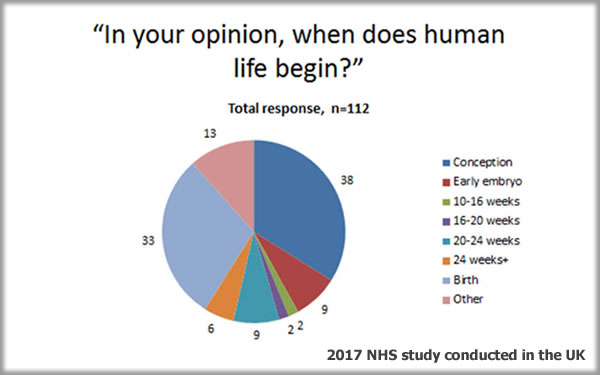
We also have a question for you, Prime Minister. And as the debate begins on abortion law reform, it is a question which becomes crucial: when does humanity begin?
THE RED LINE
The red line on this page represents the seamless stream of time from conception to birth. Where on that timeline would you mark the moment human life begins? What happened in that moment to turn growing human tissue into a growing human being?
Many have attempted to define this point: for example, when the heart beats(4 weeks), the moment of brain activity (6 weeks), or at the point of viability – when, if born prematurely, the baby has a chance of survival (22-27 weeks).
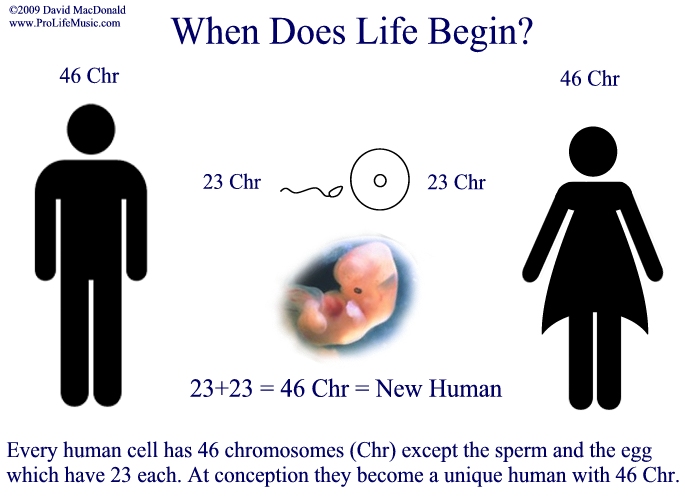
There are biological problems with almost all beginningof-humanity markers. At every point on this line, even at conception, the 23 chromosomes from each parent are already in place, as is all the genetic information required for a lifetime. Staggering amounts of development will take place, but on what grounds do we decide that a change inside the womb is the becoming of a child rather than simply the growing of a child?
A WOMAN’S RIGHT TO DECIDE
Arguably the most defining argument for abortion is the right of a woman to determine what happens to her body. “My body, my choice” is the abbreviated argument. There is truth in those four words, and legal protection is already given to women.
But while there is truth, we believe it is not the whole truth. My body, is not the only body, which means my rights are not the only rights.
The moment an unborn child’s humanity is recognised, the rights of a woman are reframed – and not simply by law.
All good mothers, who have the right to eat, drink, and do as they please, willingly curb their rights for the wellbeing of their unborn children.
But a mother’s love does not give her unborn child humanity and human rights. We believe love is an acknowledgment that inside the womb is a who, not a what; a child, not a thing. And in a progressive society, that instinct is supported by the full weight of law, ensuring that the rights of its most vulnerable citizens are given the same legal protection as all others.
THE IMPACT ON THE WOMAN
The acknowledgement that abortion ends a life is one of the reasons we – and thousands of others – live with regret and sadness. We did what we thought was best at the time, encouraged or in some cases pressured by those around us. But we have suffered. We acknowledge all women are different, and their experiences of abortion are different, but New Zealand scientists have found women who have abortions are 30% more likely to experience mental health problems such as depression, anxiety, suicide ideation and substance abuse.
None of this is easy. When there are two bodies involved, and two people with human rights, it can be a complex legal dance to protect them both. What is clear to us is that giving human rights solely to the mother at the expense of the life of a child is not something any good society would do. Nor is disregarding the health impacts of abortion. It is clear to us that abortion is both a health issue and a legal issue.
WHERE WILL YOU PLACE YOUR MARK?
Prime Minister, so much hangs on where you place your mark on the timeline.
A failure to locate the mark – or a failure to be cautious in doing so – may find us inadvertently killing human beings rather than merely ‘removing human tissue.’ And a failure to acknowledge that many suffer after abortion is a failure to care for women’s health.
For you, the task is harder because your stance will be public; you will be acutely aware of the political implications.
Jacinda, as our Prime Minister, and as a mother, err on the side of caution. Do everything in your power to shape our laws to reflect the caution that this life-and-death issue surely warrants.
Barbara Hill, Mother of 4 (incl.1 aborted) Linda C., Mother of 2 (1 aborted) Erena Lagas, Mother of 3 (2 aborted) Marina Young, Mother of 4 (1 aborted) Karmenne Prebble, Mother of 7 (1 aborted, 1 adopted) Sylvia Bowden, Mother of 3 (1 aborted) Dawn Green, Mother of 4 (1 aborted) Angela Hughes, Mother of 4 (1 aborted)
Dear Jacinda – About the letter
A group of women who have all experienced abortion have today published an open letter to the Prime Minster, Jacinda Ardern.
It is thought to be the first time in New Zealand history a group of post-abortive women have spoken publicly about the issue – and follows the release of the Law Commission’s report on abortion law reform.
Spokesperson Barbara Hill says they wanted to highlight the fact many women suffer psychologically after abortion.
“Abortion is so much more than having your appendix out. It is a loss – albeit self-inflicted – and the grief and pain is very real,” she says.
Tauranga-based Hill says the eight signatories to the letter were happy to sign their full names, along with the total number of children to which each woman is a mother – including those who were aborted or adopted.
“There is such silence and self-condemnation around abortion, so we are happy the country is going to have a discussion about it. It is time to talk about the impact of what is presented as ‘just another minor surgery’ – and to be honest about what abortion is and does.”
As a mental health educator, Hill has worked with many post-abortive women struggling with the emotional fallout. She says a common theme is that there is insufficient information given at the time of the abortion.
“There is next to no counselling. We’re told it’s just a bunch of cells. Instinctively we know this isn’t true – that’s why women agonise over ‘whether to keep the baby.’ Then later, when we have ultrasound scans for subsequent pregnancies, we see the truth for ourselves.
“Personally, I did not make an informed choice. I just stepped onto an expedient conveyor-belt of medical practice, and later paid a heavy price. After my abortion, I was sad, depressed, angry, and lacking trust in myself and others. For decades.”
Published in three nationwide newspapers on Sunday and Monday – the Sunday Star Times, Herald on Sundayand Dominion Post– the full-page letter asks Jacinda Ardern to take into account the life-and-death nature of abortion, along with the health effects for women, and to err on the side of caution if making legislative changes. The letter asks the Prime Minister an important ethical question about humanity in the womb – at what point does it begin?
“The acknowledgement that abortion ends a life is one of the reasons we – and thousands of other women – live with regret and sadness,” the letter reads. “And a failure to acknowledge that many suffer after an abortion is a failure to care for women’s health.”
“When there are two bodies involved, and two people with human rights, it can be a complex legal dance to protect them both. What is clear, is that giving human rights solely to the mother at the expense of the life of a child is not something any good society would do. Nor is disregarding the health impacts of abortion. It is clear to us that abortion is both a health issue and a legal issue.”
In 2008 New Zealand scientist Professor Ron Fergusson and his team of researchers found rates of mental health problems such as depression, anxiety, suicidal behaviours and substance abuse were about 30 per cent higher in women who had experienced abortion, compared to those who had not.
NZ Christian Network is advising everyone who is concerned about the proposed Abortion Legislation Bill to make sure that they send a submission to the Abortion Legislation Committee. This matter is now very time-sensitive: Submissions close at midnight Thursday 19 September 2019.
Dr Stuart Lange wrote the following submission to the Abortion Legislation Committee in opposition to the “Abortion Legislation Bill” on behalf of New Zealand Christian Network.
The New Zealand Christian Network was established in 2002 to help churches in New Zealand to work together and to represent a reasoned Christian voice on public issues. We are a widely inter-denominational movement. We reflect a moderate orthodox/biblical Christian faith and seek to express the perspectives of at least half a million of New Zealand’s Christian people and their churches.
NZCN is OPPOSED to the “Abortion Legislation Bill”
1. We first acknowledge this is a painful issue
For many people, abortion is a very painful and divisive issue. Convictions and feelings run deep. Many find abortion tragic. Others, finding themselves unexpectedly pregnant, have been thrown into a life crisis. In anguish and fear, they have agonised over whether or not to seek an abortion, and have had to live with that decision ever since. Some grieve for family members who were never born. Many people alive today are aware that they could have been aborted, but are pleased they were not. We acknowledge that all those who proceed with unwelcome pregnancies need strong support from others, and those who have undergone an abortion need compassionate understanding.
2. Society needs good and balanced legislation
The health of pregnant women and the protection of the unborn are both matters where society needs excellent and balanced legislation. We are far from convinced that the Abortion Legislation Bill now before Parliament is adequate in either respect. If retained, this Bill would need very serious amendment.
3. The core problem with the Abortion Legislation Bill
The core problem with the Abortion Legislation Bill is that it has no regard for the rights or protection of unborn children, and treats abortion as solely a women’s health issue. This is a radical and unwarranted change, and one we profoundly oppose. The bill allows no rights whatsoever to unborn children, and effectively removes all protection for them. The human life growing within a pregnant woman is ignored, and treated as of no significance.
If passed, the Bill will cement into New Zealand law the principle that unborn children have no legal or human rights. This will likely pave the way in the future for an unrestricted right to abortion in New Zealand, at any stage of gestational development, and for any reason.
The Bill abandons the approach of the existing legislation, which seeks to balance the rights and needs of a pregnant woman with the rights of an unborn child. Current legislation does not give unborn children the full status and human rights of a human being, but recognises the duty of the State to give a measure of protection to unborn human lives. It provides for lawful abortions only in circumstances such as a serious risk to the life, and/or the physical or mental health of the pregnant woman. This Bill would sweep all that away.
4. The humane State and its respect for the sanctity of life
A respect for the sanctity of human life has long been a key principle governing the laws in enlightened and democratic modern states. The State’s general respect for the intrinsic value of every human life, and including the status and rights of unborn children, has in large measure reflected biblical understandings that all people are made in the image of God, are to be treasured, that we must love others as much as we love ourselves, and that compassion and the protection of the vulnerable are non-negotiable values. In the Bible, unborn humans are seen as being exquisitely formed by God within their mother’s womb (Psalm 139:15-16). Pagan pre-Christian societies had little regard for the value of human life, and widely practised abortion, infanticide, and many other forms of cruelty, but the Christianising of society generally led to a more humane outlook. Christians rejected abortion and infanticide, and society eventually followed.
5. Respect for the sanctity of life matters to us all
Respect for the sanctity of human life is not just some religious scruple or philosophical ideal which may lightly be discarded. It is a powerful public good, and a key element of a compassionate, and safe society. It makes everyone safer. The incremental erosion of respect for the sanctity of human life makes everyone less safe. The abandoning of any protection for unborn human lives is a dangerous step for society. In the twentieth century, various oppressive States deemed successive groups as less than human, stripped them of rights, and many millions subsequently died.
6. Respect for the sanctity of life needs to be widely debated
This Bill is not a “reform” or “updating”, as claimed, but represents a major shift in public policy with massive ethical implications. The bill is drawn up in such a way as to exclude the obvious ethical issue that abortion involves the taking of unborn life, and that society has a legitimate interest in the protection of unborn human lives.
The arbitrary legal extinguishing of all human rights for unborn children (contrary to previous law) is a matter of major ethical and societal importance. It should be studied and debated fully. The 1977 provision in New Zealand law for abortions in some circumstances followed two years of deliberations by a Royal Commission of Enquiry, with extensive study, discussion and public consultation. No comparable process has preceded the Abortion Legislation Bill.
7. The claimed justification for the bill is spurious
Supporters of the Bill allege that women need to have abortion “decriminalised”. But there is no basis for that. There has been provision for lawful abortion in New Zealand since 1977. Under the current legislation, no woman has ever been criminalised by having an abortion, lawful or otherwise.
The current inclusion of parts of the existing legislation under the Crimes Act reflects the inescapable reality that abortion involves ending the life of an unborn child, which remains a very serious thing.
We have no objection to abortion legislation being domiciled outside the framework of the Crimes Act. That is not the key issue. What really matters is that society and the state should give appropriate protection to the unborn child, along with allowing abortion where it is genuinely necessary for the health of the mother.
The call for decriminalisation appears to be primarily a means to securing abortion on demand, with absolutely no regard for any rights of the unborn child.
8. The argument that a pregnant woman’s autonomy over “her own body”
It is asserted that a woman should have autonomy over her “own” body, and that therefore abortion should be an absolute right. But such an argument overlooks the inescapable reality that pregnancy is about “having a baby”, and that abortion is about ending the life of that unborn baby.
It is argued an unborn child is part of a woman’s body. That is an unsustainable claim, and clearly contrary to biological science. Certainly an unborn child is intimately connected to the mother, and utterly dependent on her body, and nourished by her body. But the baby is never part of her body.
From the outset, a human embryo is a distinct human organism, with its own genetic code, and its own body and developing brain and organs. It is not yet a developed foetus, or a viable “human being”. But it is programmed to be born, and to live a human life beyond the womb, potentially for another hundred years. It is clearly not part of the woman’s body.
9. The claim that abortion is “just a health procedure”
Abortion may well be seen as a health procedure for a woman who does not wish to continue her pregnancy. But it is the very opposite of a “health procedure” for the unborn child.
10. The Royal Commission of Inquiry had it about right
We endorse the part of the 1977 report of the Royal Commission on Contraception, Sterilisation, and Abortion which declared it ethically wrong, except for good reason, to terminate unborn life. It asserted that, regardless of whether an unborn child can be seen as full human being, abortion “extinguishes the potentiality of life” and is thus “a most serious step”. Abortion on demand “would be to deny to the unborn child any status whatsoever”, and that it would be immoral to allow abortion “for reasons of convenience”. Protection of the unborn, it said, should only give way in the face of serious danger to the mother’s life or health.
11. The existing abortion legislation strikes a reasonable balance
The existing abortion legislation reflects the continuing desire of many in society (then and now) to extend some protection to unborn children, along with the needs of women who desire an abortion. The present law states that abortion is only lawful where there is a “serious danger to the woman’s life, physical or mental health”. We believe that is a reasonable balance (but are not happy with how the existing law has been so liberally interpreted).
12. We oppose abortion on demand, as proposed in the bill
What is proposed in the Bill is abortion on demand, especially in the first twenty weeks of gestation. But a great many people in New Zealand society do not agree with abortion on demand, and continue to believe abortion is ethically justifiable only in certain circumstances.
We understand the moral distinction often made between embryos in the first twenty weeks and those unborn who have reached the stage where they could be viable if born. But an embryo of any age is still a human life in the making, and in our view still deserves protection. It ultimately makes no difference to the outcome of abortion whether an unborn child is aborted early or late in pregnancy. The end result is still death. Those destroyed in the womb will never live the life they are programmed to live: they will never know love, feel the breeze on their face, see a sunset, express their individuality, work, form relationships, have children, or experience sorrow and joy. Do we truly have the right to deny them their life?
13. No legal protection for unborn babies after twenty weeks’ gestation
What the Bill proposes for pregnancies of over twenty weeks of gestation leaves late-term unborn children with no legal protection, and vulnerable to abortion on demand.
The proposed statutory test is a very weak and vague criterion that a “health practitioner” (not even necessarily a doctor) must “reasonably believe” the abortion is “appropriate” with regard to the woman’s physical and mental health. There is no provision in the Bill for the health professional to have any regard for the rights of the unborn child. Indeed, any regard for protecting the unborn baby may be seen as beyond the scope of the new law.
We much prefer the way the existing law is worded, that after 20 weeks’ gestation lawful abortions are only allowed “when it is necessary to save the woman’s life, or prevent serious permanent injury to her physical or mental health”.
The change of law regarding abortions after 20 weeks of gestation will very likely increase the number of late-term abortions.
The proposed legislation will inevitably lead to the abortion of many more babies with disabilities, and to abortions on the grounds of sex-selection. There is nothing in the proposed legislation to prevent either of those outcomes.
Any abortion involves the death of the unborn, but – except in circumstances where it is truly necessary – the abortion of babies who would be capable of living if born alive is especially repugnant. Morally, it is very similar to infanticide.
14. The passing of the Bill would increase overall abortion rates
Legislation helps shape public attitudes. The availability of abortion on demand, in effect both before and after twenty weeks’ gestation, and the deliberate jettisoning of any legal protection for unborn human life, will almost certainly lead to an increase in the number of abortions in New Zealand. That is tragic, not least because the number of abortions has been declining.
We accept that abortion is sometimes ethically justified. We agree that abortion should be “safe, legal and rare”. This Bill look set to achieve the very opposite of “rare”.
15. A major blind spot
The promotion of abortion on demand, without any regard for the life of the unborn child, is deeply inconsistent with all the commendable rhetoric in our society about the wellbeing of children, care for the vulnerable, and compassion. Unborn babies are not sub-human nothings. Biologically, they are us.
16. The language of the bill is de-humanising
We believe the change of language used by the bill is insidious in the way it de-humanises unborn children. The Crimes Act rightly refers to foetuses as an “unborn child”. But the proposed Bill only uses the term “foetus”. By and large the Bill ignores the existence of the unborn, or that any abortion “health procedure” always involves a death. The Bill also refers to the lethal drug(s) used in injections to kill foetuses as “medicine”.
17. If the Bill is retained, it should have many amendments, e.g.
The reinstatement of protection for the life of the unborn, at least after 20 weeks, making abortion after that point unlawful except for genuinely serious risk to the life of the mother and/or her physical or mental health, with explicit mention of the need to protect unborn life, and processes to ensure that provision for abortion in exceptional circumstances is not being abused by being too liberally interpreted.
Mandatory counselling prior to any decision about abortion to ensure informed choice and consent, with objective and non-coercive information about the current stage of development of the unborn child, what abortion involves for both mother and child, the risks, alternatives to abortion, and the availability of support.
A requirement for a short period of reflection before a decision is finalised
Safeguards against coercion (e.g. from partner, family, school, health practitioner etc.)
An amendment to prevent abortions on the basis of gender
Safeguards against abortion on the grounds of minor disability
Changing “health practitioner” to “medical practitioner”
Strengthening freedom of conscience provision, especially in relation to employment rights of health practitioners
Removing provision for “safe areas”, which compromises freedoms of belief, assembly, and expression
Biologically, an individual human life begins at conception, with the formation of a new human organism with his or her own unique genetic code, and programmed to develop, be born, and live life.
Although completely dependent on the mother, the unborn child is never part of a woman’s own body.
New Zealand law only recognises a baby as legally a “human being” when “born live”.
Morally and legally, many societies (including New Zealand) have seen unborn children as deserving of at least some legal protection.
Many people and societies have felt that unborn children who capable of being viable if born are deserving of the highest degree of legal protection.
If a society decides however that an unborn baby has no human rights until “born live”, unborn children are left without any foundational legal status and protection and are vulnerable to legislation permitting abortion at any stage of gestation.
There is no mention of abortion in the Bible, but there are many biblical passages and principles that we should take into account.
The Bible…
points to the great value of human beings, created by God
(Ps.100:3 – “it is He who has made us, and not we ourselves”; Isa.64:8 – “We are the clay, you are the potter; we are all the work of your hand”), made in God’s image (Gen.1:27a), breathed life by God (Gen. 2:7), crowned by God with honour and glory (Ps. 8:5), and greatly loved by God (e.g. John 3:16)
is very positive about human procreation
(Gen. 1:28; Ps. 127:3)
speaks reverentially of God beautifully forming us in the womb, and seeing and knowing us before birth
13 For you created my inmost being; you knit me together in my mother’s womb. 14 I praise you because I am fearfully and wonderfully made; your works are wonderful, I know that full well. 15 My frame was not hidden from you when I was made in the secret place, when I was woven together in the depths of the earth. 16 Your eyes saw my unformed body; all the days ordained for me were written in your book before one of them came to be.[
tells of God calling people before they were born
(Jer. 1:5; Gal.1:15)
does not address the issue whether life begins at conception or at birth, but does recognise the obvious continuity between the life that is conceived and the baby that is born
speaks warmly of unborn lives in the womb, in relation to both Jesus and John
(Luke 1:39-45)
in the Mosaic law, in one instance places a greater value upon the life of a mother than that of her unborn child (Ex. 21:22-25)
22“Now suppose two men are fighting, and in the process they accidentally strike a pregnant woman so she gives birth prematurely. If no further injury results, the man who struck the woman must pay the amount of compensation the woman’s husband demands and the judges approve.23But if there is further injury, the punishment must match the injury: a life for a life,24an eye for an eye, a tooth for a tooth, a hand for a hand, a foot for a foot,25a burn for a burn, a wound for a wound, a bruise for a bruise.
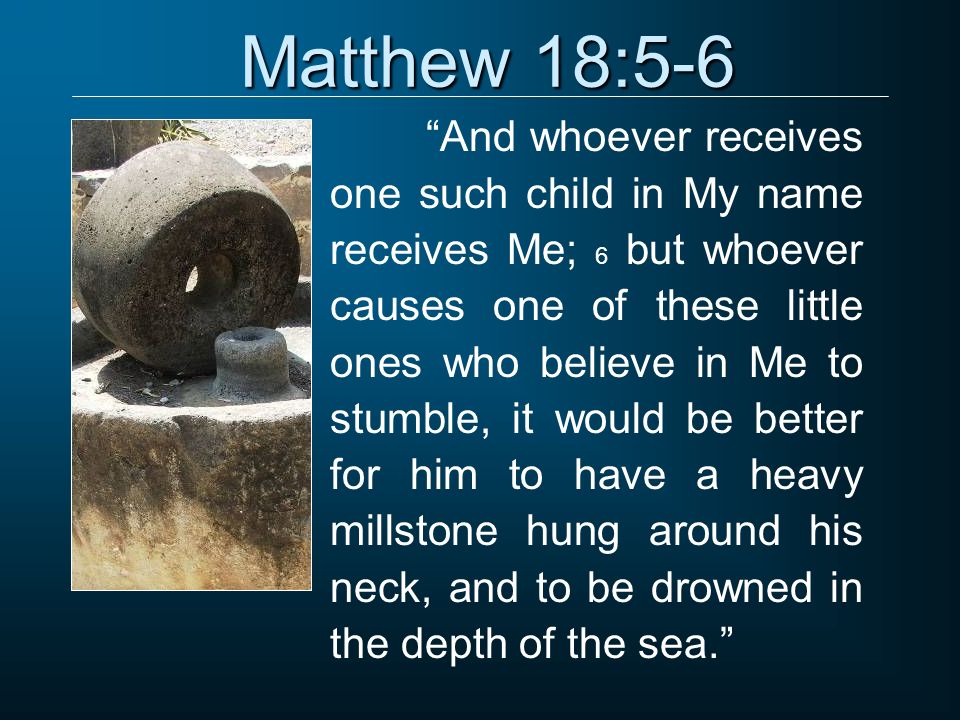
recounts Jesus’ welcome to childrenand his warning against causing them harm
(Matt. 18:5-6)
speaks often of God’s love for the weak and defenceless
(e.g. Ps. 32:13, 82:3-4)
shows God’s love for the disabled
(e.g. Ex. 4:11, Matt. 15:31, Lk. 14:13)
declares God’s love for the broken-hearted
(Ps. 34:18)
declares God’s grace and forgiveness for those who have done wrong
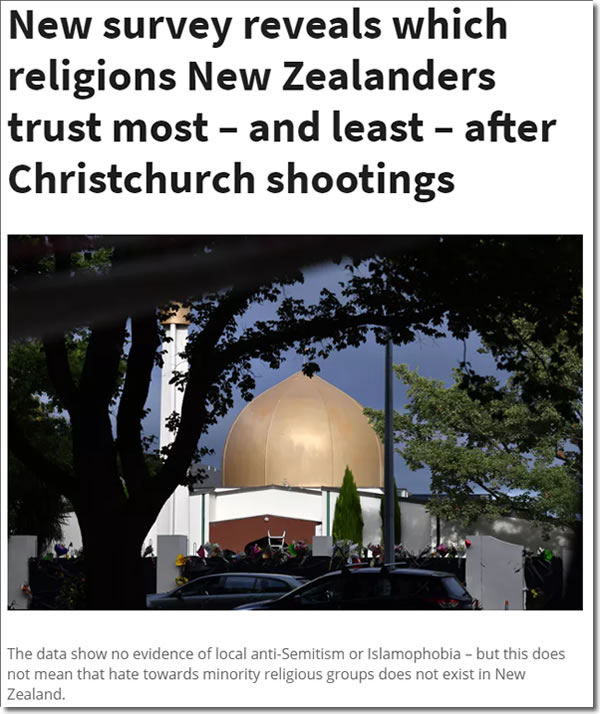
A number of media have recently carried a story about a survey seeking to measure which religions in New Zealand are the most-trusted, and which are the least trusted, in the aftermath of the 15 March terrorist attacks in Christchurch. The survey, conducted by the Institute for Governance and Policy Studies at Victoria University of Wellington, was based on a sample of one thousand people. Respondents were asked to indicate their trust in the following “religions”: Catholics, Protestants, Evangelical Christians, Muslims, Hindus, Buddhists, atheists or agnostics, and Jews.
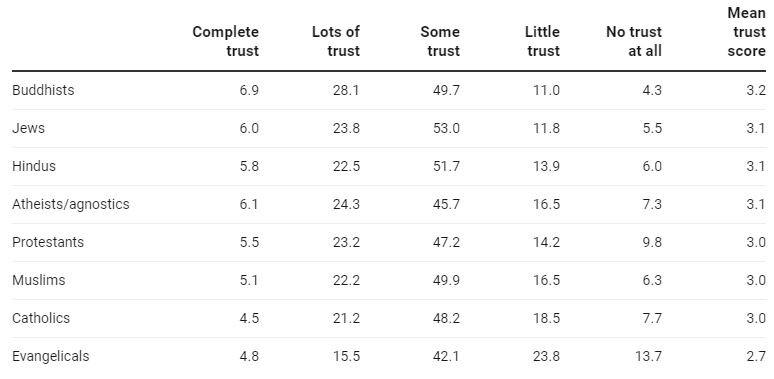
The summary that was headlined was “BUDDHISTS MOST TRUSTED, EVANGELICALS LEAST”. Respondents to the survey awarded Buddhists the most trust (35%) and the least distrust (15%). “Evangelical Christians” attracted the least trust (21%) and the most distrust (38%). All other “religions” were in a statistically indistinguishable clump in the middle.
source: business.scoop.co.nz
The summary that was headlined was “BUDDHISTS MOST TRUSTED, EVANGELICALS LEAST”. Respondents to the survey awarded Buddhists the most trust (35%) and the least distrust (15%). “Evangelical Christians” attracted the least trust (21%) and the most distrust (38%). All other “religions” were in a statistically indistinguishable clump in the middle.
Kiwis’ trust in members of different faiths. Photo credit: Institute for Governance and Policy Studies/Colmar Brunton
It is not surprising that Buddhists, with their reputation for peacefulness and for harmony with nature, were the most trusted religion in a society where many secular people (now over 40% of New Zealanders) are at least faintly drawn to the sort of diffused spirituality perceived to be associated with eastern religion. Also, Buddhists do not have a reputation for being out to convert anyone.
Given the way the survey was framed, it was perhaps inevitable that respondents would indicate the lowest degree of trust in “evangelicals”.
A number of comments can be made about the survey…
1
Most people in New Zealand – especially secular people, but also probably the majority of church-going Christians –have little or no idea what the term “evangelical” means (i.e. that it is a theological category, denoting a strong emphasis on the Gospel and the Bible).
2
The majority of people who are evangelical in New Zealand (and in most other countries), do not usually explicitly identify themselves as “evangelical”, but more often primarily identify themselves as “Christian” or by the name of their church or denomination, or by some other theological descriptor such as “Pentecostal”. Many New Zealand “Evangelicals” are in so-called mainstream churches, and many others in denominations such as the Baptists, or in independent churches. It is erroneous to assume that because only a mere 15,000 people explicitly identified themselves in the 2013 Census as “Evangelical”, they are the only people in New Zealand who are evangelical.
3
It was odd and confusing that the survey singled out “Evangelical” as one of the options, and “Protestant” as another. “Evangelical” and “Protestant” are not in fact separate or competing “religions”. The reality is, the majority of “Evangelical” Christians are also “Protestant”, and about half of New Zealand’s church-going Protestants are also evangelical in theology and practice. One term is essentially a subset of the other. So comparing one with the other is rather like comparing apples with fruit.
4
For many respondents, the word “evangelical” was probably misunderstood to mean “evangelistic”. For many people the word conjures up feelings about in-your-face, bible-bashing proselytism, something which many secular people find annoying (and which many Christian people are also uncomfortable with).
5
It is also highly likely that quite a number of respondents were also influenced by the American media’s highlighting of “evangelical” support for the Republican Party and especially for Donald Trump. The word “Evangelical” thus invokes some negative stereotypes, and for the survey to single out “evangelicals” at this time was almost to invite such a response. In our greatly different New Zealand context, however, it is fallacious to suppose that all New Zealand “Evangelicals” must be Trump-supporting, Muslim-hating bigots and xenophobes. Notwithstanding the current linkage in the United States between some evangelicals and political views, in almost every other country in the world the word “evangelical” carries no political meaning at all.
For all these reasons, it is questionable whether the survey offers us any useful new insights. Indirectly, however, the outcomes of the survey are consistent with what many of us already knew: that the term “evangelical” is currently not well known or understood within wider New Zealand society, nor even within many New Zealand churches.
But, as indicated in another article posted today (see here), the true taonga in the word “evangelical” lies not in the word itself but in what it points to, the Good News of Jesus.