Do you believe the church in New Zealand needs to be built up, to work together better, and to have greater influence? Do you believe the Christian community needs to speak better into society, with both grace and truth? Do you believe we all need to guard and nurture the spiritual unity we have in Jesus?
If so, please help us get the NEW ZEALAND CHRISTIAN NETWORK to be better known. Help us get many more Christian people and churches connected with us, receiving our newsletter, following on FB, using the website, making contact, partnering with us.
The NZCN exists to gather (to help bring evangelical/charismatic/Pentecostal NZ Christians together in closer fellowship and a common Gospel cause), to build (to help resource, strengthen and build up the church in New Zealand and increase its constructive influence on society), and to speak (to speak into both church and society, with grace and truth).
Four issues currently facing the government and the citizens of Aotearoa New Zealand are outlined below.
We appreciate you doing whatever you can to strengthen NZCN’s connections with your church, friends and family.
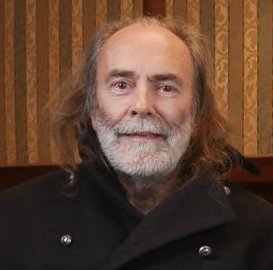
Dr Stuart Lange (interim National Director)
Major issues we need to be informed about, to pray about, and to talk to our MP about
The critical second reading of this Bill, which would legalise euthanasia and assisted suicide in New Zealand, is likely to take place very soon, possibly on June 20.
1. The End of Life Choice Bill
An overwhelming 91.8% of the submissions to the Justice Committee were opposed to the Bill (and 93.5% of submissions from medical personnel), the report of the Justice Committee identified major problems with the Bill, but there remains a risk that a majority of MPs may vote for the Bill.
Please be praying, and please seriously consider clearly (but courteously) communicating your concerns to your MP – and the same applies to the issues which follow.
2. Proposed abortion ‘reform
The Law Commission has considered proposals for changing the law around abortion, to reduce the stigma of abortion, to increase the freedom of women to make their own decisions, and to increase the accessibility of abortion. It is proposed to take abortion out of the Crimes Act, and that performing an abortion be regarded as simply a health procedure. The inclusion of abortion within the Crimes Act recognises that abortion involves bringing about the death of human foetus. Making abortion merely a health procedure implies that unborn babies are merely organic material, with no human rights.
At present, performing an abortion is illegal unless it falls within certain exceptions: abortion is legally permissible up to 20 weeks’ gestation if authorised by two certifying consultants, if there is (a) ‘serious danger to the life, or physical or mental health’ of the mother (including pregnancy as a result of sexual violation), or (b) serious foetal abnormality, or (c) if the pregnancy results from incest, or (d) the mother is ‘severely subnormal’ (has significant mental, physical or intellectual impairment). After 20 weeks’ gestation, abortion must be necessary to save the life of the woman or to prevent serious permanent injury to her physical or mental health.
All three proposed models involve further liberalisation of New Zealand’s abortion law, and would remove the requirement for two certifying consultants. Model A would make abortion available to any woman (in consultation with her doctor) for any reason, at any stage of pregnancy. Model B would make abortion available to any woman, subject to a statutory test: ‘If the health practitioner who intends to perform the abortion reasonably agrees the abortion is appropriate in all the circumstances, having regard to the woman’s physical and mental health and wellbeing’. Model C would apply Model A (abortion for any reason, at any stage, with no statutory test) to pregnancies up to 22 weeks’ gestation, and would apply Model B (statutory test and decision made by the doctor who intends to perform the abortion) to pregnancies after 22 weeks’ gestation.
None of the three proposals appear to demonstrate regard for the rights of unborn children. Surely a just and humane society, along with being concerned for the health and wellbeing of women, should be eager to protect those who are among its most vulnerable children, the unborn. All abortion ends a life, for whatever reason, but late-term abortion is especially abhorrent. Abortion can also often involve long-term consequences for the mothers. If abortion is to become a normal health procedure, there are also questions around whether doctors and nurses would be free on conscientious grounds to decline to participate in abortions. Does New Zealand really want or need these changes?
3. Proposals for ‘hate speech’ legislation
This is an issue full of complications and dangers.
While it is already a crime to incite hatred and violence against anyone (and rightly so), and there is no place for the sort of hatred which lies behind racism and terrorism, it could become a significant threat to freedoms of religion and of speech if ‘hate speech’ became defined or interpreted as expressing religious or moral views which some groups might complain are offensive and ‘hateful’ and thus a criminal offence.
Could it one day become illegal, for example, to publicly proclaim that Christ is the way, the truth and the life (something which may offend some atheists or members of another faith), or to admit the belief that God intended marriage as a union of one man and one woman? Could expressing such views lead to dismissal from one’s job or profession? Would it be illegal to quote certain parts of the Bible? Would such laws be applied equally: would atheists and members of minority faiths be equally at risk of breaking the law, or would Christians be subject to particular restrictions?
The recent dismissal in Australia of rugby star Israel Folau indicates how freedoms of religion and expression (whatever we may think about how wisely those rights were exercised) are now under threat in the public sphere.
4. The legalisation of marijuana
Making marijuana legal and freely available would have major negative effects on New Zealand society, not least in terms of health, mental health, road safety, and the safety of the workplace.
Why would we even consider this move? Have we not learned from the huge costs to society tobacco use and alcohol abuse? Do we really need another such harmful industry, peddling its products and enjoying the profits while downplaying the very significant social and health costs?
The October edition of the North and South magazine has just been published here in New Zealand, and it contains a nine page article on abortion law in New Zealand.
Not only is the article little more than a one-sided attempt to try and sell the extreme ideology and legislative proposals of the Abortion Law Reform Association of NZ (ALRANZ), but it is riddled with factual and logical flaws.
These flaws start with the title of the article ‘The Meaning of Life‘, a rather odd choice considering the fact that the article doesn’t even really come close to asking the fundamental ethical question at the heart of the abortion debate: ‘is a fetus a living human being entitled to the right to life?’
Before I explore various statements made in the article, I just want to point out some stats so you can get an idea of how one-sided this article is.
The article is 9 pages long, yet approximately just 1/2 to 3/4 of one page, in total, is dedicated to pro-life comment.
Approximately 21 people were interviewed in this article, only 3 are pro-life, the other 18 are pro-choice – and of that other 18, by my count, 13 are either committed pro-choice activists, or abortion industry personal.
Having said that, Amy Blowers, one of the three pro-lifers interviewed, does an awesome job, in the very brief column space she was given, of presenting the important fact that the abortion debate is about ethics, NOT about religion.
If I was to pull this article to pieces line-by-line we’d be here all week, so I have decided to just focus on the aspects of it that caught my attention, and are, I think, worthy of discussion here.
It’s NOT about religion!
Much of this article attempts to frame the abortion debate as a debate about religious beliefs, and it paints the very clear, but totally erroneous picture that this is a debate between one group who want to force a religious dogma on the entire population (the pro-lifers), and another group that is committed to women’s empowerment and autonomy.
This is a classic straw man on the part of the pro-choice movement, because the actual debate about abortion ethics has nothing to do with religion. Instead this is a debate about human ethics, human rights and whether it is right to kill human beings while they are in a womb.
Yes, pro-lifers do come from various religious backgrounds, but then a lot of them also come from no religious background whatsoever (there are at least 6 million non religious pro-lifers in the US alone!) – more importantly; pro-lifers don’t think that abortion is wrong because ‘God told us so’, instead we oppose it because we believe that unborn human beings are people too, and because we embrace the radical idea that it is wrong to deliberately kill innocent human persons.
Sadly this article doesn’t even come close to attempting to engage the fundamental ethical questions at the heart of this debate, instead it just scrapes the bottom of the barrel, and regurgitates the tired old pro-choice sophistry which falsely claims that opposition to abortion is purely a religious matter.
Enough of the one-sided rewriting of NZ history!
There is a reasonable amount of so-called ‘history’ presented in this article. There’s just one problem, the retelling is VERY one-sided, and it digs up old incidents in such a distorted way as to create a false impression of the real history of this debate.
Yes, some anti-abortionists from decades past did engage in extreme activities, however the VAST majority of pro-lifers did NOT – they did nothing more than peacefully protest abortion in New Zealand.
Not only that, but the article tries to impute guilt to pro-lifers for things that almost certainly have NOTHING to do with us – like the recent cutting of fuel lines on the car of an Auckland abortion clinic employee. There is ZERO evidence to link this event with any pro-lifer, and in all likelihood it was actually a case of someone stealing fuel from the car. However that doesn’t stop this studious journo from including comment about it in her article – comment which implies, without ANY justification whatsoever, that it still could have been pro-lifers.
If you want to talk about scary tactics, ones that have actually happened in the past few years, let’s explore in detail the attempts to disaffiliate a pro-life club from Auckland University for peacefully handing out a pamphlet which simply questioned whether women were truly being offered informed consent about abortion in NZ. Or maybe we could discuss pro-life medical professionals being refused jobs simply because they don’t endorse abortion (which is supposed to be illegal in NZ, by the way).
Once again, this is little more the pro-choice smoke and mirrors aimed at discrediting the pro-life movement before a single question can even be asked of the glaring logical flaws in the pro-choice ideology which endorses the killing of human beings in utero.
No, post-abortion trauma is NOT caused by opposition to abortion
I once interviewed a woman who had had two abortions before carrying her third child to term. I still vividly remember the moment when she looked at the camera and stated that when the doctors handed her third child to her after the delivery that she suddenly realized that her previous two children had been murdered (yes, she really did use the word ‘murdered’). As far as I was aware, this woman had no faith background at all, and she certainly wasn’t some timid creature – she was, in fact, a pretty ordinary Kiwi woman who managed her own successful small business.
Yet, if one is to take the claims made in this North and South article seriously, then that woman was actually deluded or lying about her post-abortion grief. According to the ludicrous comments in this article, the only reason she feels pain about her abortions is because someone else tricked or guilted her into feeling pain about it.
Try telling that to the many, many women who told their post-abortion grief stories to Melinda Tankard Reist in her book Giving Sorrow Words.
Yes, I get annoyed at the blatant unwillingness of the pro-choice ideologues to enter into honest debate and have the serious logical flaws of their ideology exposed, but the one thing that really angers me is their continual attempts to pour insult and scorn up women suffering from post-abortion grief by refusing to acknowledge the reality of their suffering. Here you have one of the greatest hypocrisies of this debate: a movement which claims to be pro-woman, while at the same time insinuating that women who are psychologically wounded by abortion are either mentally unwell, or liars.
The current NZ abortion laws costs the healthcare sector money
This was one of the more laughable attempts to justify loosening the current NZ abortion laws (page 62 of the North and South article). If we’re going to talk about saving money for the NZ healthcare sector, then let’s start by having a discussion about removing ALL taxpayer funding for social and preference abortions (non-life saving). Requiring people to fund their own ethically problematic procedures would certainly free up millions of dollars that could be spent on actual life-saving treatments.
And while we’re at it, let’s stop giving millions of dollars to the International Planned Parenthood Federation and instead keep that money in NZ to be used for real healthcare in this country.
You would do WHAT to women who don’t want to have an abortionist kill their unborn child?!
Just listen to this rather disturbing comment from Auckland abortion clinic manager Lesley Wood (page 63 of the article):
“If it were up to her [Wood], she’d put women choosing to keep their baby in front of a panel. “You don’t have two doctors asking them how they’re going to look after this precious little thing and make sure it’s loved and fed for the rest of their lives. The decision to have and parent a child, that’s lifelong and it’s a lot bigger than deciding to have an abortion.”
The truly troubling nature of this comment should give you a good indication of the extremism that is on offer from the pro-choice ideologues right here in good old NZ, and why the last thing this country needs is to start listening to their calls for further loosening of our current abortion laws.
As they say in the rural sector ‘this is totally arse about face’.
This is a drug that has caused multiple female deaths all over the globe, and yet pro-choice activists still try and defend it as ‘safe’ – yet more reason to doubt their claims of being a pro-woman movement.
Actually Simon, conscientious objection is still a right
On page 64 of the article abortionist Simon Snook refers to conscientious objection (you know, that important human right that even medical professionals are allowed to exercise) on the part of medical professionals as “doctors being deliberately obstructive”.
This is just another example of the many hypocrisies that riddle the movement which claims to be all about ‘choice’ – what they really mean, if their actual statements and actions are to be believed, is: ‘choice for only SOME’.
I’m sorry Simon, but your claims about abortion law are not supported by the facts
Staying with abortionist Simon Snook, on page 64 of the article he states that:
“the abortion rates in countries where [abortion is] illegal or restricted is the same as in those with more liberal laws. “You just have more women dying through illegal abortions.”
Yeah, I’m gonna have to go ahead and call you on that one Simon, because it’s just not true.
Ireland has one of the most restrictive abortion laws in the world, yet they also have one of the lowest rates of maternal mortality in the world – their maternal mortality rate is FAR lower than the US where most states allow abortion-on-demand, and often right up to birth.
How’s this for a classic case of woeful ethical logic, once again from abortionist Simon Snook (page 64 of the article):
“I don’t view an embryo or fetus as having the same rights as the person potentially having to raise it in the world.”
Just stop and consider what Snook is suggesting here – he’s giving the right to terminate a human being to the person who has to raise that human being, and he’s basing his refusal to give rights to the fetus based on the impact it will have on the person who will have to care for it as it grows.
How does this not invite the obvious question: what about the person who has to raise an infant, or even a teenager in the world? Shouldn’t they also get more rights, including the right to have that child terminated, because of the fact that they have to potentially keep raising it in the world?
Yes Professor Fergusson, ideology, not truth, is certainly king of the abortion debate at the moment
One of the most telling statements in this article comes from Professor David Fergusson, a researcher who describes himself as a pro-choice atheist. On page 65 he states:
“Colleagues have told him they won’t do work on abortion “because they know they’ll be attacked and vilified unless they produce the right answer”
I can tell you right now that these attacks are not coming from opponents of abortion – they simply don’t don’t hold enough power in the academic halls of power to do such a thing.
Sadly even Fergusson falls prey to this refusal to follow the facts where they clearly point. His own research shows that there is an increased risk of anxiety, alcohol and drug abuse, and suicidal behavior in women who have had abortions, yet he still states that one of his fears is that his “research could be used to stop women having access to abortion”. The tractor beam pull of ideology is strong indeed, even for an honest researcher like Professor Fergusson.
You do realise that Wendy Davis supported an extreme abortion law, right?!
Page 65 of the article refers to Texas senator Wendy Davis, calling her a “new hero” of “the women’s movement in America” because she filibustered a law, introducing abortion restrictions, by standing and saying nothing of any real consequence for almost 13 hours (yes, I do see the irony).
Does the author of this article realize that what Wendy Davis was fighting so hard to stop was a law that banned abortions AFTER 20 weeks?!
Yep, that’s right, she’s a hero because she supports late term abortions. Even the majority of people who call themselves pro-choice would not support such an extreme position on the issue of abortion.
I’m sorry, but when did the President of Planned Parenthood become a NZ citizen?
Page 65 of the article features an interview with Cecile Richards, President of Planned Parenthood in America.
Now I’m confused, exactly what does the President of America’s largest for-profit abortion business have to do with New Zealand abortion laws? Let me give you a hint: nothing. Unless of course you are someone who wants to see the extreme pro-abortion politics of the USA, and all of the truly frightening realities that go along with it, introduced in this country as well.
So you’ll excuse me for not wanting to take advice from an extreme US abortion ideologue who runs an organisation that makes millions of dollars every year from selling abortions to vulnerable women.
Does Steve Chadwick realise that she’s just provided a justification for killing any dependent child?
On page 66 of the article former Labour MP, and architect of the last failed attempt to liberalize NZ abortion laws states the following:
“There’s this picture of a young, at-risk mother [being the woman must likely to need access to abortion] but often it’s the women who are already struggling with three or four children and know they’ll be on their own and can’t give another little one quality of life.”
Any thinking person can see that this line of reasoning wouldn’t just justify abortion, but also the killing of ANY dependent child, no matter what their age. What if a pregnant mother decided that she couldn’t give a good quality of life to her teenage daughter, but she could provide it for her unborn child? What would happen if she went to her local MP and asked them to lobby for a law change that allowed parents to have any dependent child terminated if they felt that their quality of life wasn’t going to be good?
See what I mean about the serious logical flaws of the pro-choice ideology?
What Chadwick is proposing here is truly insane: that a child who couldn’t be guaranteed a good quality of life is better off being killed when they are young.
What makes this position even more insane is the fact that it could actually be solved by providing better support services to women in need, but then that’s far more complex and costly than the cheap and easy option of abortion – so NZ women in need will instead be left with little to no choice, and then they’ll be told that this lack of choice is actually in their best interest.
We want control!
Alison McCulloch is quoted on page 66 of the article:
“If you can’t control whether you have children, you can’t control your own life fully”
Sure, but isn’t this a control that should be exercized BEFORE you actually engage in the most effective act for making children? Does no one else think that it’s totally irresponsible and ethically reprehensible for a couple to freely enter into the very act which biology has given us to make new vulnerable and dependent human beings, and then to have the lives of those vulnerable human beings terminated because they then decided, after the fact, that they didn’t actually want the new vulnerable and dependent human being they are responsible for creating?
And, once again, we have a pro-choice ideologue who is proposing a line of reasoning which actually justifies the killing of ANY child, not just those in utero. What about the mother of a 6 month old baby girl who suddenly changes her mind and decides that she wants to control whether or not she has children, so she smothers her daughter with a pillow? Would that be acceptable to Alison McCulloch?
I am assuming it wouldn’t be, but then why not?
If it can be shown that a fetus is actually a personal moral subject, just like a 6 month old child is, then what, apart from a totally arbitrary standard, could actually stop the same argument she presents in this article from being used to justify killing the 6 month old baby girl in the name of personal freedom?
The state made me do it!
On page 67 of the North and South article Alison McCulloch offers one of the most ridiculous arguments for her ardent pro-abortion activism:
“What does it mean if women are told they can’t have an abortion? If you look at it from the other side, where the agency of the state is being used to force pregnancy onto an unwilling person, there’s a bit more clarity around that.”
Despite the absolute absurdity of this position, it is NEVER even questioned in this article.
By restricting or outlawing abortion the state would not be forcing motherhood on anyone (that’s something the couple freely opened the door to when they chose to engage in the very act which makes persons into mothers or fathers), instead the state is saying that no one has the right to kill an innocent human person.
This same principle applies in the state’s refusal to legalize infanticide, or the killing of older children – the state is NOT forcing motherhood on women of older children by refusing to legalize child killing after birth, instead it is simply upholding the hugely important ethical norm that homicide is such a gravely unjust and unethical act that it can never be tolerated by the state.
No, fetal pain is NOT relevant to the central ethical question about abortion
On the last page of the article the author makes a reference to fetal pain as if the lack of fetal pain would somehow justify the killing of an unborn human being. Killing an innocent human person does not suddenly become acceptable if they don’t feel any pain in the killing process. If I give someone anesthetic BEFORE decapitating them, I haven’t suddenly made my act of homicide ethical.
Enough of the arbitrary inventions for justifying abortion please
How’s this for an arbitrary statement attempting to justify abortion (page 67 of the article):
“I believe that at 40 weeks’ gestation, a baby has equal rights to the mother, and on the day of conception, it has zero rights,” says one doctor. “It’s a continuum of where you sit on that line.”
Let me introduce my own equally arbitrary statement: ‘I believe that at puberty a child has equal rights to it’s parents, and on the day of conception, it has zero rights. It’s a continuum of where you sit on that line’.
Saying something is NOT the same thing as it being true.
Not only is this statement confused, but it is based on nothing more than whim – making it extremely dangerous and completely unsound. Surely we owe it to ourselves as a species to ensure that the justifications we are basing major ethical decisions and laws on are actually true, and not just inventions plucked from the air?
Amy Blowers – Prolife NZ
Let me finish by again highlighting the awesome contribution of Amy Blowers, of Prolife NZ, to this article, and also by reminding you that many of the pro-choice views presented in this article are clearly NOT supported by the majority of Kiwis. How else can one explain the open display of fear at the end of the article from pro-abortion activist Nikki Whyte, who laments the growing opposition to abortion, and the fact that more and more young people are joining the ranks of that opposition.
I wrote an article in one of the national newspapers a couple of weeks ago in praise of Lucinda Creighton and afterwards received an email that gave me pause for reflection. It was short and not so sweet. My correspondent didn’t like my views, and indeed seemed to like Lucinda’s even less. But what intrigued me was the graphic image at the core of the communication – of a teenage Down Syndrome girl who has been raped. People like Lucinda Creighton and myself, he declared, were standing in the way of her receiving an abortion.
The email didn’t change my mind about abortion, but it put me thinking about the way liberals have managed to win this debate, and will go on to win many more. I was briefly tempted to write back to this man (my correspondent was male) and ask him for the name of the teenage girl he referred to. In the end I decided against this course, feeling that it might give him a perverse kind of encouragement.
But of course there was no teenager with Down Syndrome. The girl had no name because she did not exist. It stuck me then that at least half of the argumentation put forward by the ‘pro-choice’ lobby is similarly lacking in any reality, being purely hypothetical. I can think of no other issue in respect of which the debate could take place in such abstract, dissociated terms. Imagine a debate about motor transport, for example, being conducted in this way: it would take just one or two instances of people being killed by motor vehicles to ensure that mechanically-propelled vehicles were banned for all time.
In the past 30 years, there has been a handful of real-life public controversies in which the issue of abortion was critical in the life of an actual woman – the X and C cases, for example, and more recently the Savita Halappanavar case. And yet, the pro-choice, building on this handful of cases, and augmenting its arguments with a series of creative hypotheses has, in effect, changed Ireland from being a nation inflexibly opposed to abortion to a society on the cusp of giving the nod to one of the most liberal abortion regimes in the world.
The debate of the past nine months confirms that this is going to happen, and there is no point in sticking our heads in the sand. Given the conditions in which these ‘debates’ occur, this is inevitable and cannot be prevented. For one thing, the ‘debates’ are almost invariably hosted by ‘liberal’ journalists, and, for another, the skewed dynamics of the ‘debates’ ensure that these are really dramas in which traditionalist forces are pitted against liberals in a manner than ensures only the liberal argument can win. Hence, it is not so much a question as testing both sides of an argument as dramatising the victory of ‘truth’ over ‘error’. If the present media culture is permitted to continue, abortion will eventually be introduced into Ireland. It is only a matter of time.
But those taking up the other side of the argument must take some responsibility also. Because of its outlook, ideology and tactics, the pro-life side has done much to deliver victory into the hands of its opponents, most notoriously in its promotion of the 1983 constitutional amendment, which had the effect of overriding a perfectly adequate anti-abortion law with a measure that in effect placed the rights of mother and child in diametric opposition, leaving the decision in complex cases to be decided by the courts. Once you redefine the relationship of mother and child outside its natural symbiosis, identifying the two parties as competing entities, the child has a diminishing chance of survival. Hence, that amendment unwittingly delivered the unborn child into a new dispensation of individualised rights, in which the balance of advantage – by virtue of ideology and the media’s capacity to manipulate public sympathies – would most likely be overwhelmingly on the side of the mother. Each successive case has resulted in a further erosion of the legal situation, which has now been formalised in the Protection of Life in Pregnancy Bill.
At the heart of this debate has been the recurring theme that pregnancy is always by definition an imposition on a woman, unless she chooses to define things otherwise.
Once this idea is accepted, abortion on demand becomes merely a matter of time, because the very bedrock of the culture becomes contaminated with a quite different understanding of human nature and purpose than was understood hitherto. Rarely is it pointed out that it is not in the nature of mothers to be opposed to their children, unborn of otherwise. On the contrary, the very idea of motherhood, and indeed fatherhood, is centred on providing for the needs of the child even at the expense of the parent’s personal well-being or even ‘rights’. Most parents, for example, would think nothing of risking their lives to rescue one of their children from a burning motor vehicle. And yet liberals use as a central bulwark of their debating tactics the idea that no woman should ever be expected to incur any risk by virtue of being pregnant.
Life is risk, and most people accept this. The number of people who are unwilling to run such risks for their children are miniscule, and yet the outlook of this tiny notional minority is used to effect the most fundamental changes in our understandings about the very nature and structure of human beings.
Another major failing on the pro-life side has been its attitude to the position of fathers in relation to unborn children. Irish Catholicism is by its nature mother-centred, and has therefore, unbeknownst to itself, been supplying a harmony to the feminist rhetoric emanating from the ‘pro-choice’ side. There is no point banging on, in different contexts, about ‘family values’, if you neglect to emphasis this aspect where it is most vital. The only person I heard alluding to fathers during the recent discussion was the (now former) Fine Gael TD Peter Mathews.
And there is an even more fundamental difficulty in as far as the Catholic contribution to these discussion is concerned. In recent times, Irish Catholicism has been asserting itself in the public domain almost exclusively in the context of battles to prevent the social drift of Irish society from taking a different direction to Catholic moral teaching. The word ‘abortion’ has become almost a synonym for ‘Catholic’, provoking public demonstrations characterised by extremist statements and intense rage. Meanwhile, the insistent and growing pressure in our culture to remove Christian thinking from the mainstream of education and culture attracts virtually no opposition from within the Catholic Church – apart from an occasional and timid resistance which might easily be construed as the straightforward protection of territory.
It is a problem that Catholic contributions to these debates rarely penetrate to the heart of the Christian teaching involved. Thus, the ‘traditional’ argument is easily dismissed as arising from simplistic positions, usually expressed in the form of unadorned and unsubtle rules – for example, that ‘all human life is sacred’, or that ‘marriage is between a man and a woman’. Such is the construction of the debate-drama that the reiteration of such reductionist rules serves merely to confirm that the interest of Christianity in this context is to oppose the impetus of modern society, rather than, for example, to make clear why Christians have come to think as they do. In the kind of public discourse we have arrived at, the telegrammatic expression of such values acquires precisely the texture and context which those on the other side of the argument rejoice in.