
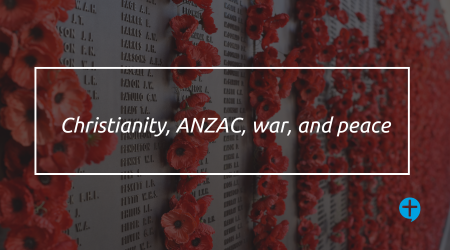
In New Zealand, ANZAC commemorations honour the hardships and sacrifices of those who went overseas to fight in two world wars and various subsequent wars. Most were ordinary young civilians, volunteers or conscripts, who accepted their duty to help defend their country. They acted bravely, in frightening circumstances. Many came home emotionally scarred, about 40,000 were wounded, and over 30,000 were killed. They came from our own families and communities. ANZAC remembrances need neither glorify nor sanctify war. But it honours those who served, those who died, and those who mourned.
In this fallen world, there have always been wars. Wars reflect the innate tribalism in human nature, competition for land and resources, the desire to dominate, and clashes of ideology and belief. And when attacked, people will defend themselves if they can.
New Zealand has had its own share of wars, both in pre-European and colonial times, and has since participated in overseas wars. This country also developed a minority tradition of Christian pacifists, who in times of war were given a hard time by authorities.
In the Old Testament times, war was seen as a means of securing and defending the land promised to God’s covenant people, and of repelling idolatrous influences.
In the New Testament, Jesus neither endorsed nor condemned warfare, but his teaching was strong on forgiveness and reconciliation, and on loving and praying for your enemies. And he declared “Blessed are the peacemakers”.
The early church was opposed to Christians serving in the military. In the second century, Tertullian asked: “Shall it be lawful to make an occupation of the sword when the Lord proclaims that he who uses the sword shall perish by the sword?” and Hippolytus declared that if a baptised Christians wishes to become a soldier, “let him be cast out, for he has despised God”. Part of that was that the Roman Army was very closely associated with pagan practices.
In the fourth century, the Roman Empire began to be led by emperors who now favoured Christianity, and Christians became a new elite. Christian leaders at that time became more positive about the need to defend the Empire against would-be invaders. In that context, Augustine’s teaching about “just war” recognised both the inevitability of war and the need for ethical constraints on war, such as the requirements for a just cause, a right intention (e.g. justice and peace), and proper conduct (including mercy in victory, rather than cruel vengeance). Those Christian-derived and time-honoured ethical principles remain influential, even though down through the centuries they have perhaps more often been breached than closely applied. They continue to offer useful perspectives, a way of reflecting on all sorts of wars both past and present, and into the future.
In this world, the call to peace remains, along with the reality that governments may rightly call upon their citizens to help defend others from harm. Christians have differed on how to respond to that call. Yet many have served with courage, and have acted justly even in the midst of war. On ANZAC Day, we honour those who served, and suffered, and those who lost their lives. We pray for a world where there is more peace and less war. And in faith we look forward to when Christ shall come, and there shall be a new heaven and earth, and evil and war and death shall be defeated for ever.

Author: Dr Stuart Lange
Dr Stuart Lange is the National Director of the NZCN and is a Senior Research Fellow at Laidlaw College, where he was formerly Vice Principal. Stuart wrote and presented the historical DVD documentary Te Rongopai: 200 years of the Gospel in New Zealand, 1814-2014.






0 Comments